The Unseen Carl Jung: 26 Surprising Facts About the Master of the Unconscious
Lark Lauren 10.16.2026
I’ve been spending some deep time reading and listening to the life and inner world of Carl Jung, and I managed to isolate 26 fascinating, lesser-known facts about his early years, family lineage, and inner development.
Two remarkable titles brought all of this into focus, obtained courtesy of the Olcott Memorial Library of the Theosophical Society in America:
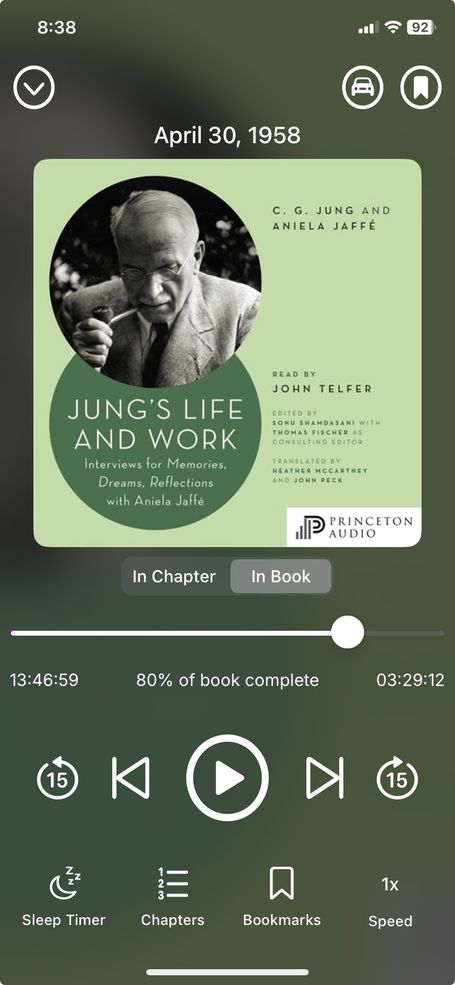
Jung’s Life and Work: Interviews for Memories, Dreams, Reflections with Aniela Jaffé (Audiobook)
This contains the raw, uncurated, and previously omitted interview protocols recorded by Aniela Jaffé. Unlike the heavily edited, "toned down" published memoir, this unedited version gives you Jung in his own candid voice. Jung was explicitly clear about what mattered to him: he wanted people to know deeply about his inner visions, dreams, and spiritual experiences, placing almost no emphasis on external events or the conventional people in his life. Very few people were even mentioned in his biography (his wife of 50+ years, Emma, is mentioned only once, regarding her death), while ample, sacred space is given to his visions and the so-called "psychic lava" bubbling underneath.
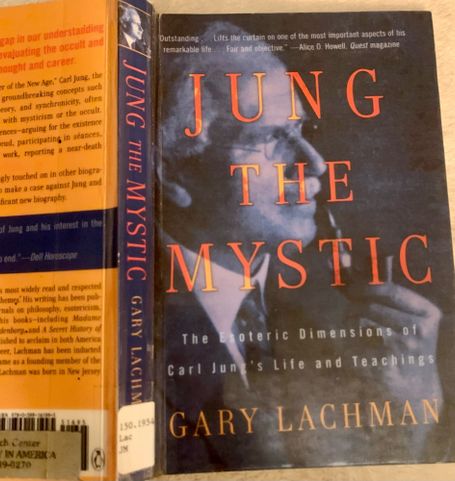
Jung the Mystic: The Esoteric Dimensions of Carl Jung’s Life and Teachings by Gary Lachman
An incredible deep dive into the esoteric, alchemical, and mystical currents that fueled Jung's scientific work throughout his life.
Key Takeaways & Highlights
Who Actually Read His Books? While academics often kept Jung at arm's length, the octogenarian Jung noted near the end of his life: "Do you know who reads my books? It's the ordinary people, often quite poor people." He even recalled an old Jewish peddler who knocked on his door just to meet the man "responsible for all those books."
The Dual Personality (No. 1 & No. 2): From age 12, Jung recognized a distinct internal split within himself between Personality No. 1 (the ordinary schoolboy) and Personality No. 2 ("The Other")—an authoritative 18th-century gentleman in a white wig, buckled shoes, and carriage who held young Carl in contempt and felt like a past life.
The "Asocial Monster": A childhood friend recalled meeting young Jung as an "asocial monster" who played ninepins alone, ignored everyone, and flew into rages if anyone observed or interfered with his private games.
The 26 Facts About Carl Jung
- A childhood friend recalled meeting young Jung as an "asocial monster" who played ninepins alone, ignored others, and flew into rages if anyone observed or interrupted his private games.
- At age nine, when his sister Gertrude was born, Jung rejected the story that a stork brought her, reasoning from his observations of farm animals that no stork could carry a calf or a baby.
- Attending school in Basel, Jung felt isolated and envious of his wealthy peers, often sitting through class in wet socks because his shoes had holes in them.
- As a boy, Jung created little fires in stone "caves" as the sole "keeper of the flame".
- He sat on a specific stone in deep reverie, wondering whether he was sitting on the stone or if the stone was thinking "this boy is sitting on me", a feeling of timelessness he later recognized as central to discovering one's personal myth.
- Jung carved a small wooden man, placed it in a pencil case with a special stone, and hid it in the attic.
- Years later, discovering similar ancient traditions (such as Australian churingas and figures of Telesphoros) proved to him that his childhood ritual with the hidden wooden man sprang from what he would term the collective unconscious.
- Jung hated abstract quantities and algebra, doing poorly in mechanical drawing unless his imagination was fired up.
- He found comfort in learning that Goethe and Nietzsche were also terrible at math.
- After a classmate knocked him down at age 12, Jung realized he could avoid school and indulged in six months of reading and daydreaming while suffering hysterical fainting fits whenever homework came up.
- He cured himself by applying what William James called the "bullying treatment", forcing himself to study Latin despite fainting until he pushed past the attacks.
- Shortly after overcoming his neurosis, 12-year-old Jung had a sudden awakening while walking to school, realizing "now I am myself!" and feeling a sense of personal authority and "self-remembering" for the first time.
- Jung developed a dual identity split between Personality No. 1 (the ordinary, everyday schoolboy) and Personality No. 2 ("The Other," an authoritative 18th-century gentleman in a white wig, buckled shoes, and carriage who looked down on young Carl).
- Jung felt connected to Personality No. 2 via historical artifacts and hinted that it felt like a past life.
- Sensing his unusual inner maturity, his schoolmates nicknamed him "Father Abraham".
- Jung worked hard on a German essay, but it was so well written that his teacher publicly accused him of plagiarizing it, leaving him feeling "marked for life" by the world's unfairness.
- Finding his first Communion empty ("So that's that") and believing his clergyman father lacked real experience of God, Jung concluded the formal church was no place for genuine spiritual truth, turning instead toward gnosis (direct experience).
- Schopenhauer appealed to Jung because he addressed real-life suffering, evil, and the blind unconscious "Will".
- Kant provided the idea that we cannot perceive reality "in-itself," leading Jung to argue that we can never observe the unconscious or archetypes directly, only their symbolic effects in the psyche.
- Throughout his life, Jung experienced vivid half-dream images (faces, designs, landscapes) right before sleep (hypnagogia), a capacity he later turned into his signature technique of Active Imagination.
- Jung’s main role model was his paternal grandfather (Carl Gustav Jung Sr.), a Basel doctor, Grand Master of Swiss Masons, and friend of Franz Liszt who famously walked a pet pig on a leash, drank absinthe in Paris, and served time in prison for political ties.
- Jung changed his first name spelling from "Karl" to "Carl" to match his grandfather.
- In his autobiography, Memories, Dreams, Reflections, Jung mentions his wife of over 50 years, Emma, only once in a reference to her death.
- Popularized in the 1960s/70s counterculture alongside Hesse, Huxley, and Watts, Jung was largely responsible for spreading the idea of the "Age of Aquarius" and popularizing the I Ching and The Tibetan Book of the Dead.
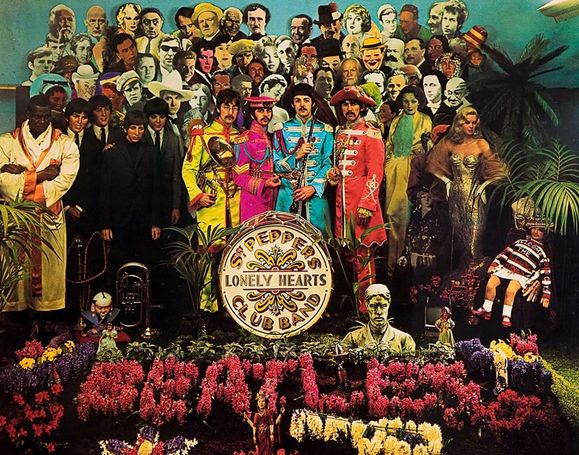
- Jung’s face was included on the cover of The Beatles' 1967 album Sgt. Pepper's Lonely Hearts Club Band.
- Near the end of his life, Jung noted that his books were primarily read not by elite academics, but by "ordinary people, often quite poor people" seeking inner guidance.
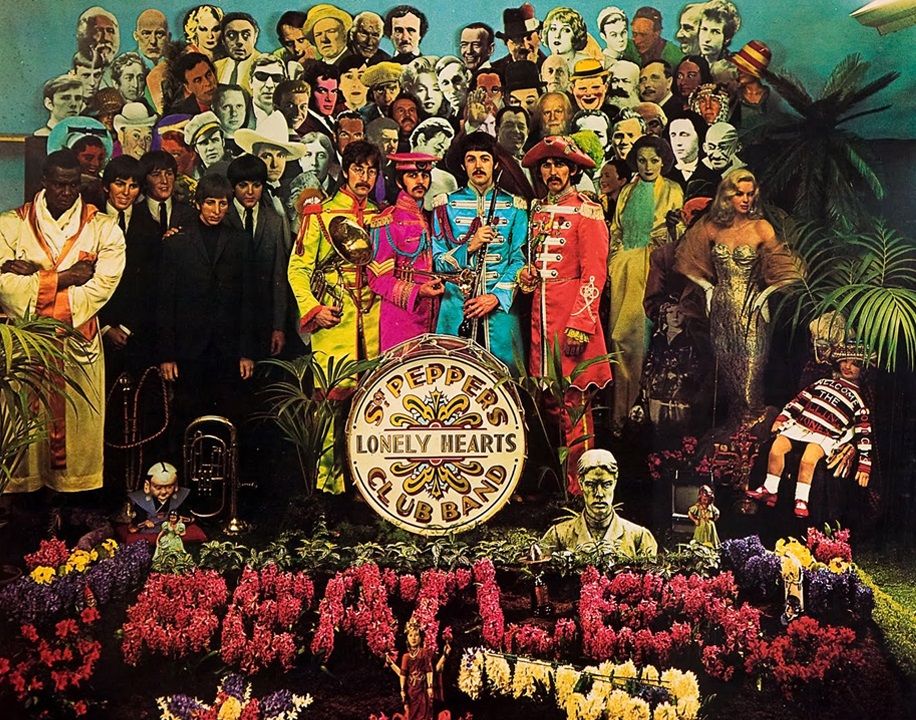
Carl Jung on the iconic cover of The Beatles' 1967 album, Sgt. Pepper’s Lonely Hearts Club Band
If you look closely at the top row (7th figure from the left), right between W.C. Fields and Edgar Allan Poe, you’ll spot Jung’s face!
When Peter Blake and Jann Haworth assembled the famous crowd collage based on input from John Lennon, Paul McCartney, and George Harrison, Jung earned his place among the pantheon of figures who shaped the modern imagination.
During the 1960s, Jung’s deep explorations of archetypes, myth, dreams, and inner transformation had organically captured the counterculture.
Although rejected by many mainstream academic intellectuals during his lifetime, Jung’s profound influence found its home among artists, visionaries, and ordinary seekers so much so that he ended up standing side-by-side with rock icons, poets, and mystics.