Mirrors of the Same Light: Jung, Zen Awakening, and the Western Soul
Lark Lauren 9.3.2026
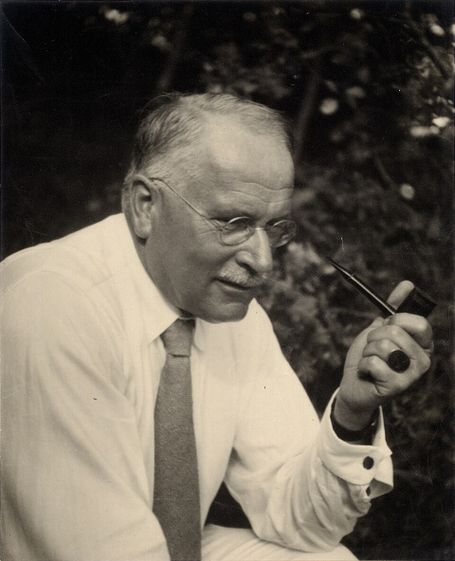
Carl Jung’s relationship with Eastern wisdom has always lived in a space between attraction and restraint, a tension that reveals as much about the Western psyche as it does about Zen, Hindu realization, or the esoteric traditions of the Theosophical world. When Jung wrote that “Satori, however, depicts an art and a way of enlightenment which is practically impossible for the European to appreciate” in An Introduction to Zen Buddhism, he was not drawing a hard metaphysical boundary around enlightenment. He was describing a cultural posture, a habitual mode of consciousness shaped by centuries of conceptual thinking. The Western mind, as Jung saw it, approaches inner truth through analysis, comparison, and translation. Zen demands the opposite: a direct, unmediated experience that cannot be grasped by the intellect. This is why the teaching of Kodo Sawaki resonates so strongly with Jung’s observation. Sawaki writes: “Gain is delusion. Loss is enlightenment… Stop trying to become something special and just be what you are.”. Enlightenment is not something one acquires; it is what remains when striving ends. Jung understood this, but he also understood how deeply Western consciousness is shaped by the need to interpret what must be lived.
Yet Jung never claimed that satori was inaccessible to individuals in the West. He spoke of the average European of his time, not the seeker who breaks through cultural conditioning. The principle itself is universal. The obstacle is the conceptual habit. Once that loosens, the door opens the same way for anyone. This is why Jung’s later conversation with Shin’ichi Hisamatsu, is so striking. When asked whether the liberation spoken of in Zen could be realized in psychotherapy, Jung answered: “The goal in psychotherapy is exactly the same as in Buddhism.” And even more astonishingly, when asked whether one could be liberated from the collective unconscious, Jung replied: “Yes!” It is one of the closest moments Jung ever came to acknowledging a satori-like breakthrough within Western psychological terms.
Individuation, in Jung’s own words, is not a rare achievement but a universal process. In his letter to Erlo van Waveren, Jung writes: “One could say that the whole world with its turmoil and misery is in an individuation process. But people don’t know it.” And further: “Individuation is by no means a rare thing or a luxury of the few… Individuation is just ordinary life and what you are made conscious of.” This is the plainest description Jung ever gave. Individuation is simply becoming who you really are instead of who the world told you to be. It is not a mystical privilege. It is the natural unfolding of the psyche when awareness enters. And here again, the parallel with satori becomes visible. Both processes dissolve unconscious patterns. Both reveal the Self beyond the ego. Both require experience rather than intellectual mastery. The difference is cultural framing, not essence.
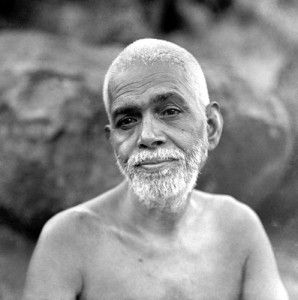
This tension between cultural framing and universal essence appears again in Jung’s refusal to meet Ramana Maharshi. The story has become almost mythic: Jung traveled through India, knew of Ramana, was urged by Heinrich Zimmer to meet him, and yet deliberately chose not to. His own explanation is preserved in his collected writings: “Perhaps I should have visited Shri Ramana… I simply could not bring myself to visit this undoubtedly distinguished man personally.” And later, in conversation with Miguel Serrano: “I knew what a Swami was; I had an exact idea of his archetype; and that was enough to know them all.” Jung feared being pulled off his Western psychological mission. He feared losing his inner flame in the presence of a far greater one.
Jung’s mission was not to adopt Eastern realization but to translate the path to the Self into Western symbolic language. His Black Books record the moment he asked his Soul, “But what is my calling?” and the answer came: “The new religion and its proclamation.” Jung spent the rest of his life shaping what he had received into a form the Western psyche could understand. Heinrich Zimmer expressed the same truth in: “Truth is universally one and the same, but mirrored variously according to the mediums in which it is reflected.” Jung believed he had to remain within his medium. Meeting Ramana might have dissolved that boundary.
And yet, the junction has happened anyway. Jung and Ramana never met physically, but their paths met archetypally. Depth psychology and Self-enquiry now inform each other across traditions. The missed encounter became a symbolic one, unfolding decades later through dialogue, scholarship, and the lived experience of seekers who walk between worlds. It even merges in this essay and we are part of it.
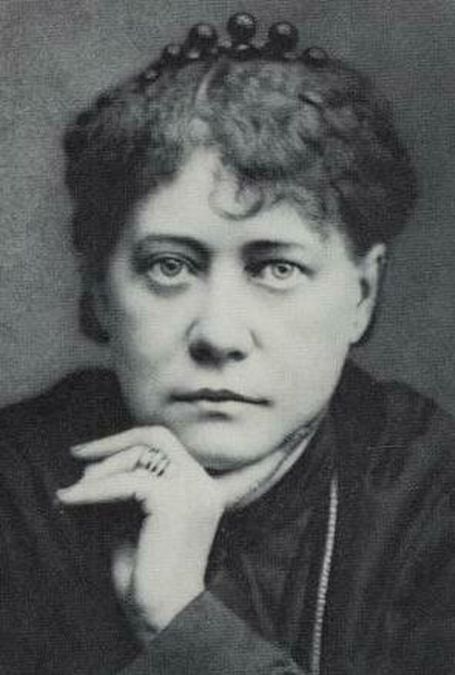
This symbolic junction becomes even more interesting when the conversation turns toward Isis Unveiled. Did Jung read Blavatsky’s monumental work? Mithras, solar ascent symbolism, comparative mythology, Hermetic themes, archetypal patterns and many other myths are included in Isis Unveiled by HPB. Did Carl Jung read it? These are precisely the domains Jung explored. Whether he read the book directly is uncertain, but it is known that Jung read Theosophical literature and engaged with figures like Alice Bailey and G.R.S. Mead. He was also critical of Theosophy naming it, unfairly, a systematized dogma. He was well informed of all the schools of esoteric philosophy. The fact that these works cannot just be mechanically read with the analytical mind echoes Jung’s critique of Western conceptualization. The symbolic terrain of Isis Unveiled and Jung’s psychology overlap profoundly, even if Jung approached it through his own lens.
Taken together, these reveal a single movement: the Self expressing itself through different cultural mirrors. Zen dissolves conceptual grasping. Individuation brings unconscious life into awareness. Ramana embodies direct realization of the Self. Blavatsky maps the esoteric architecture of myth and symbol. Jung stands at the crossroads, translating, interpreting, and protecting the Western path while acknowledging the universality of the inner journey. The Self is universal. The paths differ. The realization is one.
We are already living at that junction, and this essay allows their paths to touch, letting the long‑awaited reconciliation unfold.
And now, through the lens of this essay, it’s more clear that this triad - Jung as the archetypal Western mind, Blavatsky as the visionary, and Maharshi as the realized sage - represents a single spiral of development, expressed in three distinct stages.