Freemasonry and the Inner Architecture of the Self - Virtue as Initiation. Symbol as Transformation. Wisdom as the Path.
Lark Lauren 8.31.2026
🜁 Freemasonry and the Inner Architecture of the Self
Freemasonry has always attracted myth, speculation, and fascination. But when you step past the fog of secrecy and conspiracy, what emerges is something far more profound: a symbolic architecture of inner development. The Craft is not a hidden society but a visible map of the psyche, encoded in ritual, symbol, and virtue.
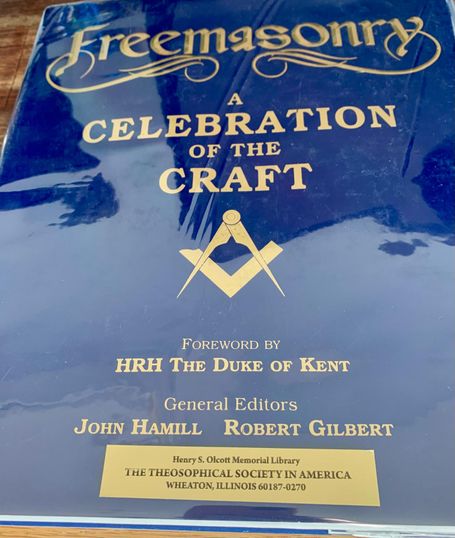
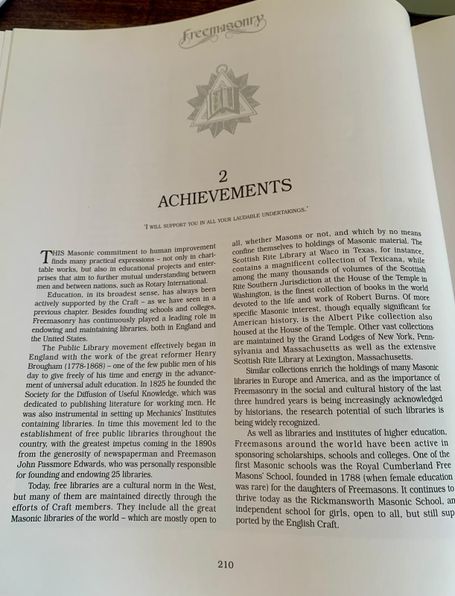
Courtesy of Olcott Library at the Theosophical Society in America, I encountered a beautiful oversized volume on Freemasonry over 250 pages of history, symbolism, regalia, and philosophical commentary. What stood out was not the external organization, but the inner geometry behind it.
Freemasonry is, at its core, a system of moral and psychological initiation.
Its symbols are not ornamental. Its virtues are not moralistic. Its rituals are not theatrical.
They are thresholds, markers of transformation.
🜂 The Ashlar: The Architecture of Becoming
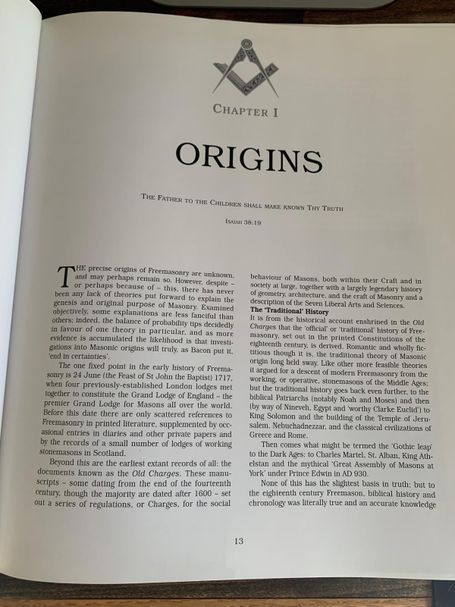
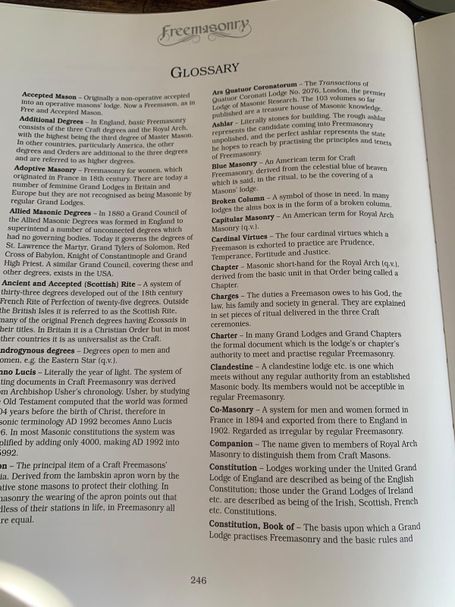
One of the most striking symbols in the Craft is the rough ashlar and the perfect ashlar.
The rough ashlar represents the human being in their raw, unshaped state, full of potential, shadow, and unrefined energy.
The perfect ashlar represents the human being shaped through discipline, virtue, and conscious inner work.
This is the entire journey of individuation in Jungian psychology: the movement from unconsciousness to integration, from rawness to refinement.
Freemasonry encodes this transformation in stone.
It is a reminder that the self is a building, and every thought, action, and virtue is a chisel.
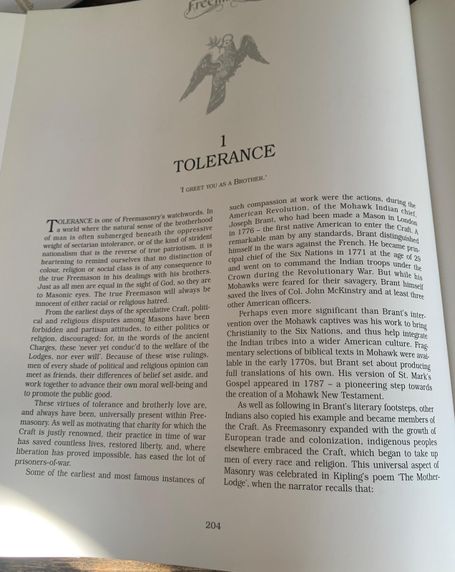
🜄 The Pelican: The Archetype of Sacrifice
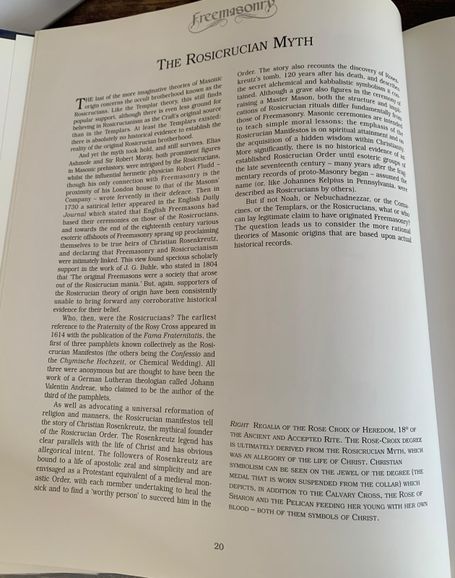
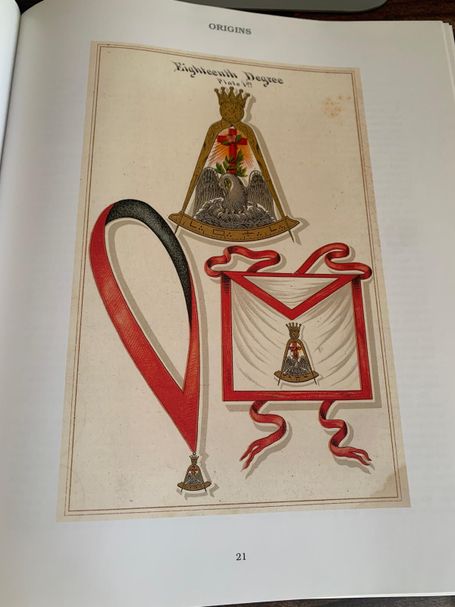
In the Eighteenth Degree, the pelican pierces its own breast to feed its young. This ancient symbol appears across Christian, Hermetic, and Rosicrucian traditions.
It represents:
- self‑giving
- compassion born from suffering
- the transformation of pain into nourishment
- the archetype of the Wounded Healer
Jung saw this pattern in Chiron, Christ, and every figure who turns their wounds into wisdom.
Freemasonry preserves this archetype as a reminder that true initiation requires offering something of oneself - ego, comfort, certainty - so that something higher can emerge.
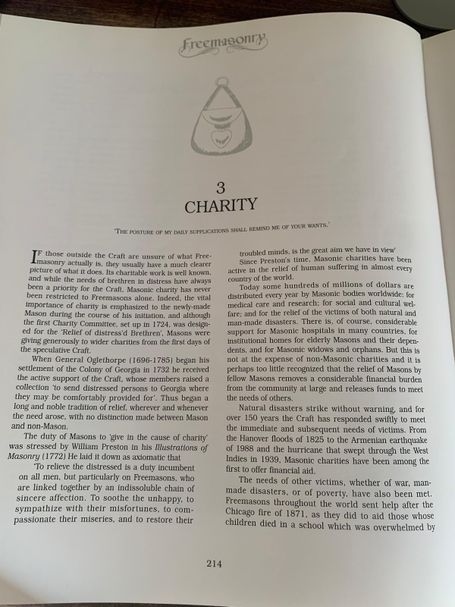
🜁 The Broken Column: Compassion for the World
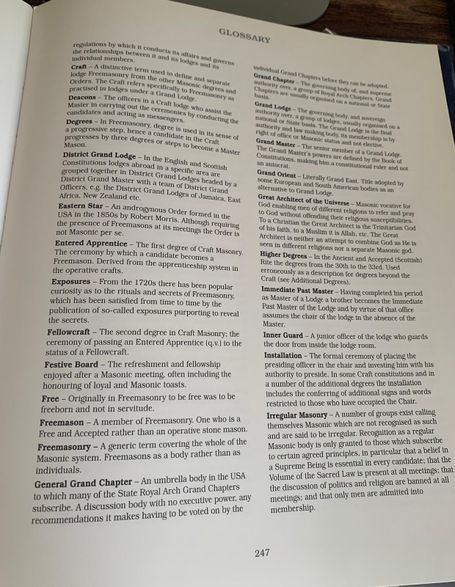
The broken column symbolizes fragility, loss, and the unfinished nature of human life.
In many lodges, the alms box is shaped like a broken column. This is not accidental.
It teaches:
- empathy
- humility
- the duty to support those whose “column” has broken
- the recognition that every person carries unseen burdens
The broken column is the archetype of the Fallen Tower—the moment when structures collapse and compassion becomes the only meaningful act.
Freemasonry encodes compassion not as sentiment, but as initiation.
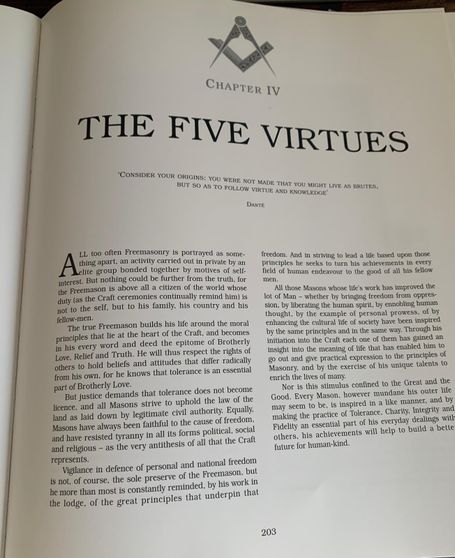
🜂 The Five Virtues: The Moral Geometry of the Craft
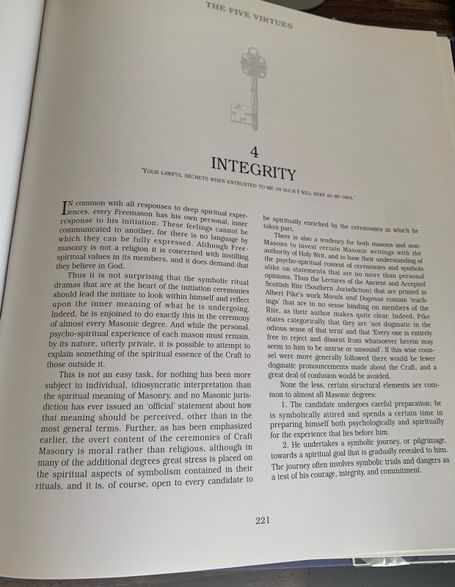
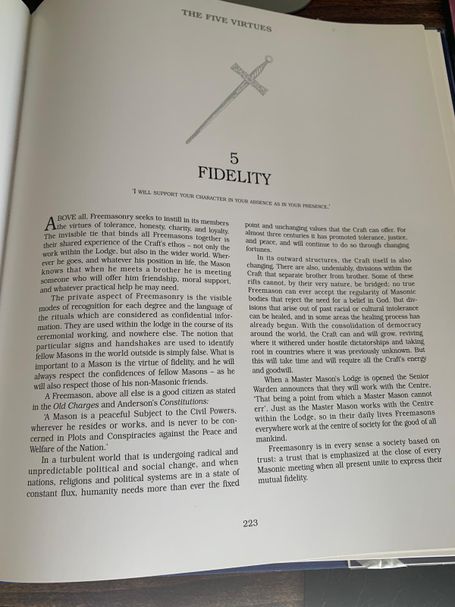
The book highlights five virtues that form the backbone of Masonic philosophy:
- Tolerance
- Charity
- Integrity
- Fidelity
- Wisdom
These are not moral slogans. They are initiatory gates.
Each virtue corresponds to a psychological threshold:
- Tolerance dissolves the ego’s rigidity.
- Charity opens the heart.
- Integrity aligns the inner and outer self.
- Fidelity binds the individual to truth and trust.
- Wisdom crowns the entire structure.
Freemasonry teaches that virtue is not behavior. It is architecture.
🜁 The Builders of Nations and Seekers of Light
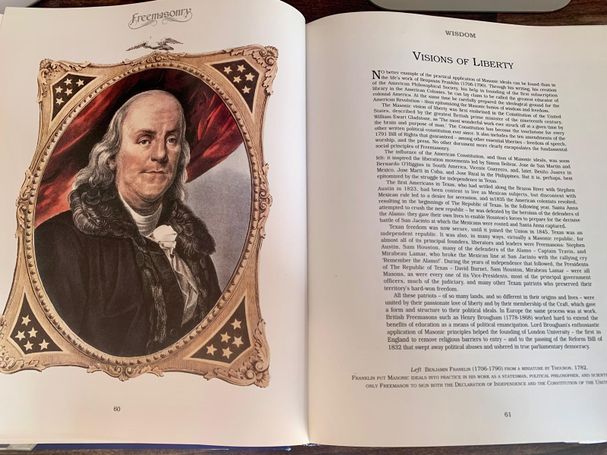
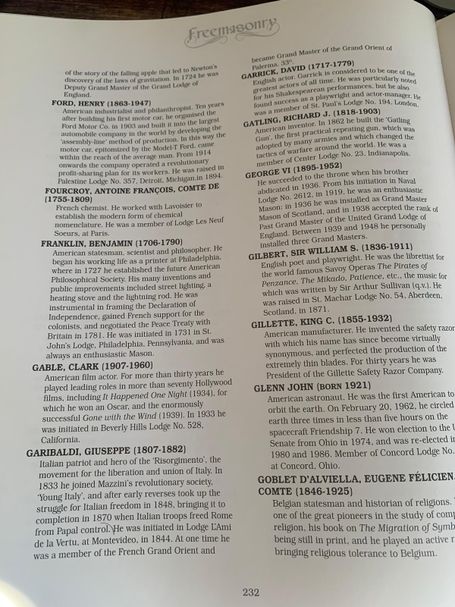
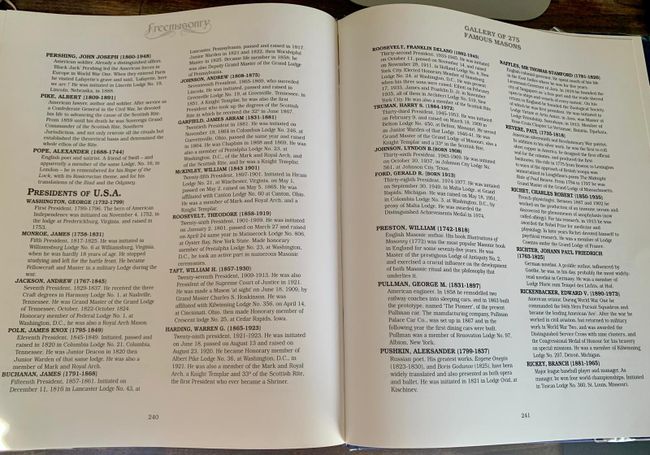
The book’s gallery of 275 famous Masons includes:
- Benjamin Franklin
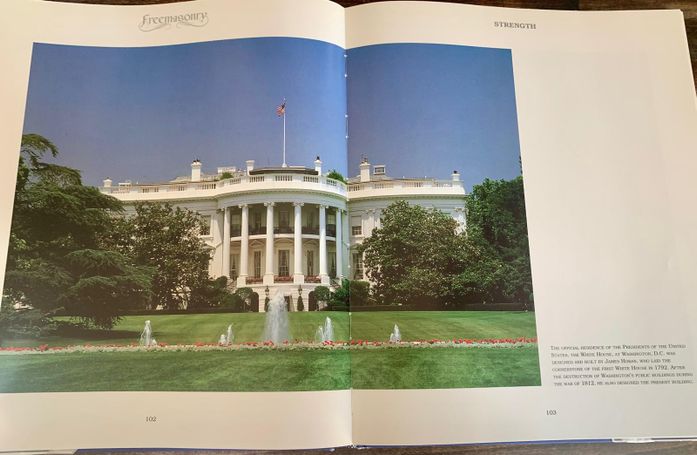
- George Washington
- Giuseppe Garibaldi
- John Glenn
- Rudyard Kipling
- Henry Ford
- Sam Houston
and many others.
These individuals were not shaped by Freemasonry alone, but they walked through its symbolic gates. They engaged with a system that emphasized:
- moral refinement
- civic responsibility
- intellectual curiosity
- service to humanity
- symbolic literacy
Freemasonry’s influence is not political—it is architectural, shaping the inner frameworks of those who shaped the outer world.
🜄 Freemasonry as Inner Architecture
When viewed through a metaphysical lens, Freemasonry becomes a universal initiatory system:
- The ashlar teaches self‑transformation.
- The pelican teaches compassionate sacrifice.
- The broken column teaches empathy for the vulnerable.
- The virtues teach the geometry of moral life.
- The regalia teaches symbolic literacy.
- The rituals teach the choreography of inner change.
Freemasonry is not a secret society. It is a symbolic language—a grammar of transformation.
It is a reminder that:
Virtue is initiation. Symbol is transformation. Wisdom is the path.
And that every human being is, in the deepest sense, a builder shaping the inner temple of the self, stone by stone.