Hope as the First Manifestation of Resistance
How Ana Blandiana, the Ringing Cedars, and The Tourniquet Series Reveal the Inner Architecture of Meaning in a Fragmented World
Lark Lauren 8.13.2026
Hope begins as a shift so small that the world cannot see it. It moves quietly inside the field of consciousness, a subtle reorientation that stops the inward folding of the self. Before any action or any visible change, hope appears as the earliest form of resistance. It is the moment when the inner architecture refuses further collapse and begins to reorganize.
Every consciousness carries a geometry. It expands when aligned with truth, contracts under pressure, fractures under distortion, and reorganizes when memory and intention rediscover each other. When systems impose artificial demands and symbolic scaffolding weakens, collapse feels natural. A slight tilt toward coherence becomes the first sign that the field is still alive. When you feel hope, the movement has already accelerated; the field has already begun reorganizing itself toward coherence.
In the Ringing Cedars of Russia, hope is described as energetic realignment. Modern civilization scatters human vitality across bureaucratic obligations, artificial environments, and emotional noise. Even in this fragmentation, the human field can shift. A return to nature, a reconnection with coherent emotional states, and a rediscovery of authentic intention become acts of resistance. Hope restores life‑force and begins the slow return of natural vitality.
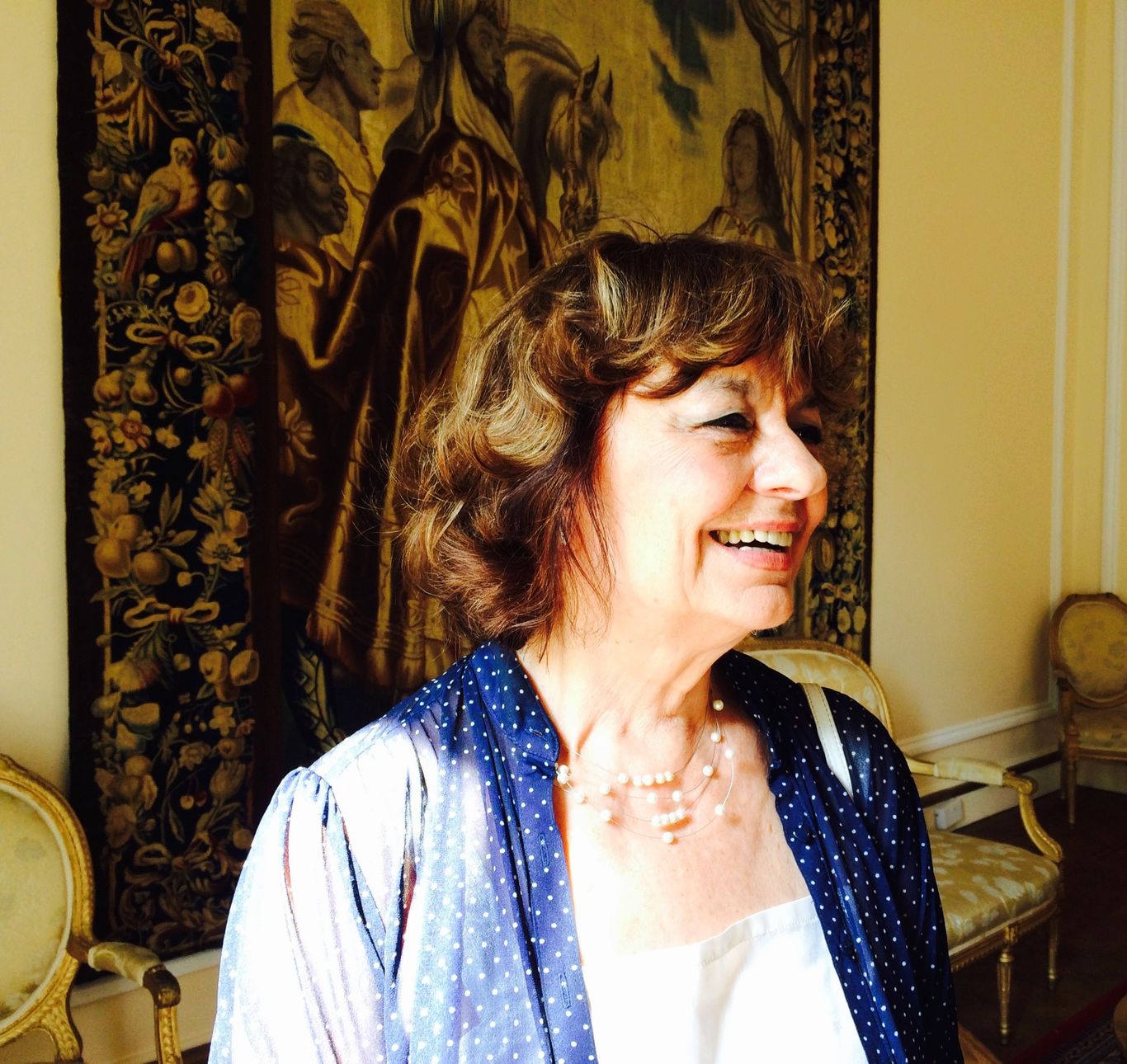
Ana Blandiana approaches hope through memory, ethics, and compassion. She is a Romanian dissident poet shaped by decades of confronting systems that attempted to erase truth. Today she visits schools because she senses a crisis of meaning within the educational field. The new generation stands in a landscape without anchors. Shared values have dissolved. The old models no longer hold. In the past, children inherited a stable moral architecture from their parents. Now they must invent meaning and build their own anchors. Blandiana feels the weight of this burden and responds with instinctive compassion. She sees that the young face a task no previous generation has carried: to create coherence in a world where coherence is no longer given.
She often invokes Saint Augustine’s phrase credo quia absurdum. Believing to the point of absurdity that good will prevail becomes a moral stance. In a landscape where nothing stands firmly, hope becomes the act of believing beyond evidence. This belief carries its own form of resistance, a refusal to let cynicism shape the future.
The Tourniquet Series, written by Lark Lauren, expresses the same architecture through narrative. In the first volume, Too Many Masters, Even More Slaves, the world appears fragmented. Meaning has collapsed. People move through symbolic debris governed by forces they cannot name. This fragmentation mirrors the collapse Blandiana sees in schools and the energetic disintegration described in the Cedars cosmology.
Hope enters the second volume, A Hope That Never Dies. It arrives through gesture. The hand mudra becomes the first manifestation of resistance, a physical sign of interior reorientation. The spiral symbol emerges as the geometry of consciousness reorganizing itself. These symbols reveal how hope becomes structure and how resistance becomes form. The interior universe begins to rebuild.
In the third volume, Shivers, liberation unfolds through the creation of the interior universe. The symbolic architecture stabilizes. The field of consciousness becomes coherent. The self becomes its own anchor. And here, Maria appears as catalyst.
Father Labby meets her on a quiet afternoon. She calls her visit a pilgrimage. They speak for hours. She shares fragments of her life, not polished anecdotes but trembling shivers of memory. Her words come unfiltered, flowing straight from the heart. She describes others as holy, yet the sanctity is in her: the reverence in her voice, the compassion in her actions, the way she served the poor and the forgotten. Her stories carry a thread of devotion, a quiet continuity of meaning. She attributes everything in her life to the presence of God, and that presence has shaped her principles, guided her ethics, and defined the way she walks through the world.
Maria becomes the ignition point for Father Labby. Her presence clarifies the symbolic field around him. She embodies the living geometry of hope. Through her, he sees how devotion becomes structure, how compassion becomes architecture, how meaning can still be created in a fragmented world. She catalyzes his awakening. She reveals the interior universe not through instruction but through example. Her life becomes the spiral symbol in human form. Her voice becomes the hand mudra translated into speech. She is the moment when hope becomes visible.
Father Labby stands as witness to this transformation. His visionary episodes reveal the mechanics of inner awakening, the moment when the field sees pattern instead of chaos. He embodies the transition from fragmentation to coherence, from collapse to creation, from despair to hope. Maria is the spark that activates this transition.
Hope carries a deeper dimension in the present world. Shared values have dissolved. The collective moral compass has fractured. The old structures that once offered direction no longer function. People search for guidance in systems that cannot provide it. The world offers noise instead of meaning. In this landscape, each person must decide alone. Each must choose an axis of meaning. Each must build a personal universe.
This is the core of Lark Lauren’s work: the insistence that every human must create an interior universe because the external one has collapsed. Hope becomes the first manifestation of this creation. It marks the moment when the self stops waiting for inherited values and begins generating its own. Consciousness chooses its own geometry. The individual becomes the architect of meaning rather than the consumer of meaning.
Hope is the seed of future architecture. It is the first stone placed in the dark. Once placed, the rest of the structure remembers its original geometry. Memory becomes directional. Silence becomes a medium. Symbolic fragments move toward each other and recognize their kinship. The movement is slow and steady. Hope persists.
Hope restores the possibility of meaning. Meaning dissolves when consciousness collapses. Meaning reappears when consciousness shifts. Hope marks the first reappearance of meaning after fragmentation. It signals that coherence is possible again. This recognition is architectural. The field senses its ability to reconstitute its own architecture. It does so under the guidance of natural laws that never change. This mirrors the first volume of Ringing Cedars of Russia, which reveals a living field that observes, responds, and restores itself whenever it returns to truth.
Hope acknowledges the landscape and the damage. It understands the distance. It carries the weight of truth. Yet it continues to move. This movement is the purest form of resistance. It requires no spectacle, no audience, no illusion. It unfolds entirely within the interior geometry of the self.
Hope is the first manifestation of resistance because it is the moment when consciousness chooses itself. It is the moment when the self begins to shape reality instead of being shaped by it. It is the moment when symbolic architecture reconstructs itself from the inside out, much like nature reestablishes its order after being disturbed. It is the moment when the future becomes natural order again.
Hope is the smallest miracle. Every miracle begins with a shift.