Carl Jung and the Mithras Liturgy: The Ancient Papyrus That Unlocked Psychology
Lark Lauren 8.14.2026
Mithras - The Sun-Tube Delusion: How an Ancient Papyrus Proved Carl Jung’s Collective Unconscious
In 1906, at the Burghölzli Psychiatric Hospital in Zurich, Carl Gustav Jung encountered a patient whose strange vision would reshape modern psychology.
The patient, a man diagnosed with schizophrenia, led Jung to a window, pointed at the sun, and instructed him to look closely. He claimed that if he moved his head side-to-side, a "tube" hanging down from the solar disk would swing along with him, generating the wind blowing across the grounds.
At the time, Jung noted the observation as an intriguing, albeit eccentric, delusion. Four years later, however, Jung came across a newly published translation of an ancient Greco-Egyptian magical manuscript—the Paris Papyrus. Inside was a ritual known as the Mithras Liturgy, describing an almost identical image.
How could an uneducated psychiatric patient in Switzerland describe a 2,000-year-old esoteric ritual from an unpublished ancient manuscript? For Jung, the answer was revolutionary: the human mind possesses an inherited, impersonal layer of memory deeper than individual experience—the Collective Unconscious.
Watch Jung Tell the Story
In his famous 1959 BBC interview on Face to Face with John Freeman, the 84-year-old Jung recounted this pivotal moment in his career.
You can watch the original interview clip here:
- Watch Carl Gustav Jung on BBC's Face to Face (1959) (The discussion of the patient's vision and the papyrus begins around the 23:18 mark). The exact mark in the video is here.
Transcript Summary & Quotation (23:18 – 26:23)
Carl Jung:
"We had a patient in the ward. He was quiet, but completely dissociated schizophrenic. And he was in the clinic, I think, for over twenty years. He had come into the clinic as a young man with no particular education.
Once I came into the ward, and he was obviously excited. He called to me, took me by the lapel of my coat, and led me to the window. He said: 'Now you will see. Now look at it. Look up at the Sun and see how it moves. You must move your head too, like this, and then you will see the tube—it follows the Sun. And you know, that's the origin of the wind. And you see how the Sun moves as you move your head from one side to the other.'
Now, of course, I didn't see it at all. I thought, 'Oh, there you are, he's just crazy.' But that case remained in my mind.
Four years later, I came across a paper written by the German historian Dieterich, who had dealt with the so-called Mithras Liturgy, a part of the great Parisian Magic Papyrus. And there he produced a part of the Mithras Liturgy, namely where they say: 'After the second prayer, thou wilt see how the disk of the Sun unfolds, and you will see hanging down from it the tube, the origin of the wind. And when you move thy face to the regions of the east, it will move there; and if you move your face to the region of the west, it will follow you.'
And then I knew: this is it. This is the vision of my patient."
Interviewer (John Freeman):
"But how could you be sure that your patient wasn't unconsciously recording something that somebody had told him?"
Carl Jung:
"Oh no, quite out of the question, because that thing was not known. It was in a magic papyrus, and it wasn't even published. It was only published four years later after I had observed it with my patient."
What is the Mithras Liturgy?
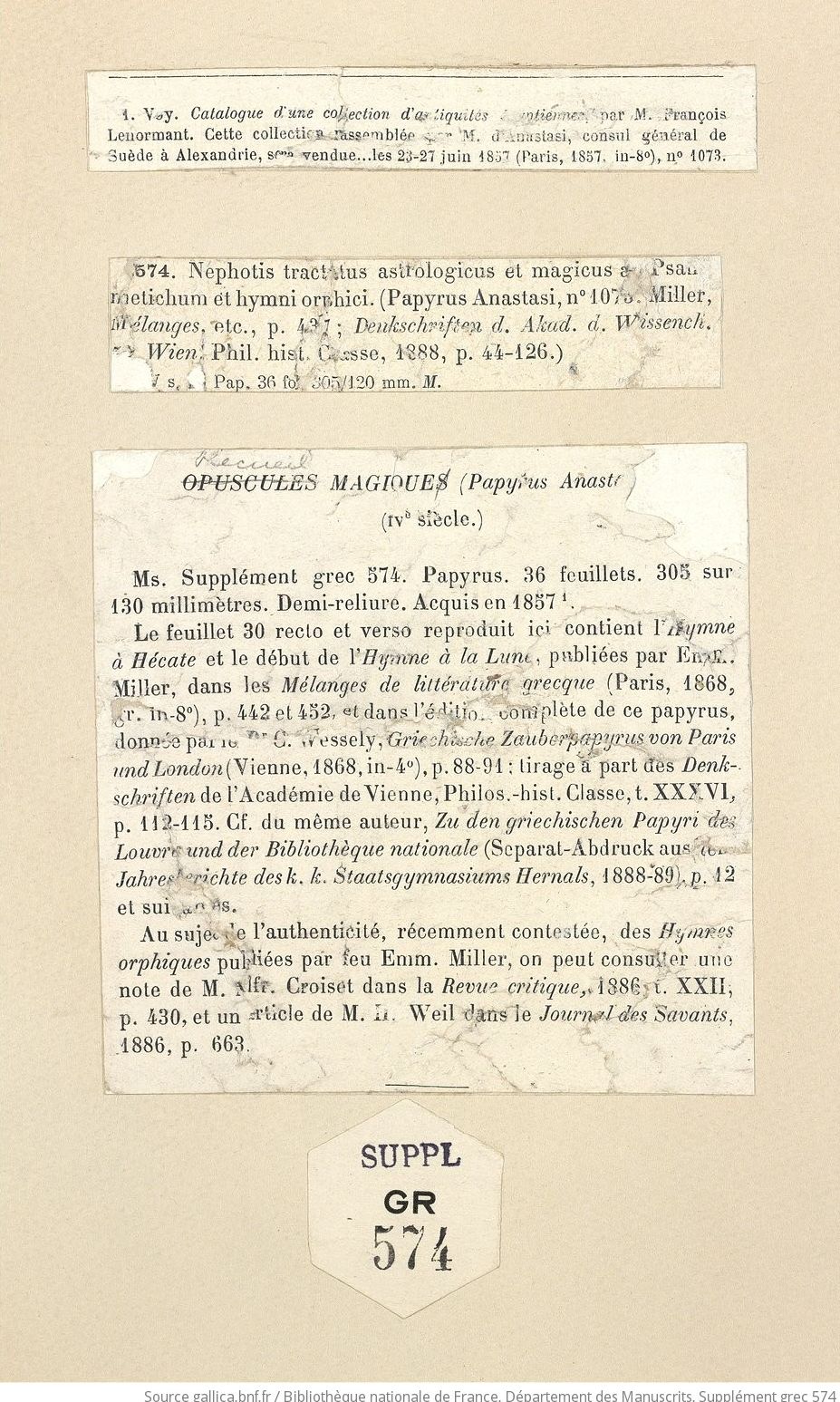
The text Jung encountered is embedded within the Great Magical Papyrus of Paris (Papyrus Graeca Media, PGM IV. 475–834), housed in the Bibliothèque Nationale de France in Paris.
The codex dates to the early 4th century AD, though scholars estimate the liturgy itself was composed between 100 AD and 150 AD in Roman Egypt. In 1903, the German classical scholar Albrecht Dieterich published a groundbreaking study and translation of the text titled Eine Mithrasliturgie, which brought the manuscript to wider academic attention.
The Ascent of the Soul and Pneuma
The Mithras Liturgy is an immortalization ritual (apathanatismos). It provides step-by-step instructions for an initiate attempting to transcend mortal limits, ascend through the planetary spheres, and achieve direct mystical union with the solar deity Helios Mithras.
Central to the ritual's cosmology is the concept of pneuma (πνεῦμα)—the ancient Greek term for breath, spirit, or cosmic vital force. The initiate breathes in the sun's rays to absorb pneuma, purifying their mortal vessel before embarking on the heavenly journey.
The Invocation: Spirit, Fire, and Celestial Flight
Before the initiate ever reaches the vision of the solar tube channeling pneuma, the Mithras Liturgy opens with a solemn invocation (PGM IV. 475–488). The practitioner addresses Providence and Fate, dedicating the sacred knowledge to their child so that their soul might ascend to the heavens "like an eagle."
Opening Text of the Liturgy
"May Providence and Fate be gracious to me as I write down these first handed-down mysteries, asking for immortality for my child, an initiate worthy of this power of ours, which the great god Helios Mithras commanded to be imparted to me by his archangel, so that I alone—an eagle—may ascend the heavens and behold all things."
This is the invocation of the prayer:
"First origin of my origin, first principle of my principle, spirit of spirit, first-fruit of the spirit (pneuma) within me, fire given by God for the mixing of the elements within me, first-fruit of the fire within me..."
Key Elements of the Invocation
The Supremacy of Pneuma: The ritual begins by invoking the internal breath or divine spirit (pneuma) of the practitioner ("spirit of spirit, first-fruit of the spirit within me"). This internal spirit is what allows the initiate to connect with the macrocosmic wind and solar force described later in the manuscript.
The Cosmic Ascent: Frame-by-frame, the liturgy prepares the practitioner to strip away mortal constraints. By calling upon the primary elements—spirit, fire, water, and earth—the initiate undergoes a transformation required to ascend through the planetary spheres to meet Helios Mithras face-to-face.
And it continues:
(translation continuation from the Eine Mithrasliturgie by Albrecht Dieterich - 1903)
"...water of the water within me first-fruit, earth-stuff of the earth-stuff within me first-fruit, my entire body [belonging to] N. N., son of N. N., fully formed by an honorable arm and an imperishable right hand in a lightless and illuminated world, in a soul-less and soul-filled world.
If it has pleased you to restore me to the birth of immortality—me, who am held fast by my given nature—so that after the present and sorely pressing distress I may behold the immortal primal source with the immortal spirit, with the immortal water, with the solid element and the air, so that I may be reborn through the spirit, that I may be consecrated and the holy spirit may blow within me, that I may admire the holy fire, that I may behold the unfathomable, awe-inspiring flood of the sunrise, and that the life-begetting and all-encompassing ether may listen to me;
for today I—born mortal from a mortal mother's womb, yet elevated by mighty power and an imperishable right hand—shall behold with immortal eyes, with immortal spirit, the immortal Aion and Lord of the Fire Crowns, purified through holy consecrations; while below me stands for a short time, purified, the human soul-power, which I shall regain after the present and pressing bitter distress, freed from debt—I, N. N., son of N. N., according to God’s immutable decree, for it is unattainable for me, being born mortal, to ascend to the heights with the golden flame-glance of the immortal light.
Stand still, perishable human nature, and straightway leave me..."
👇📘 Excerpt continues in the note at the end of the article ****
The Solar Tube Text and Citations
During the initiate’s vision of the solar realm, the text explicitly describes the origin of the world's winds via a hanging solar tube (aulos).
Textual Excerpt (PGM IV. 545–555)
"And in like manner there will be seen what is called the tube, the origin of the ministering wind. For you will see hanging down from the disk of the sun something like a tube.
And towards the regions of the west, it is as though an unlimited east wind were blowing; but if the other wind should prevail towards the regions of the east, in like manner you will see the vision turned in that direction."
In Greek, the word used for tube is aulos (αὐλός), which denotes a pipe, channel, or wind instrument. The text instructs the practitioner to turn their face toward the winds, causing the solar conduit to swing—precisely as Jung's patient had described in Zurich years prior.
## The Vision of the Solar Tube: Textual Breakdown
As the initiate ascends through the mid-air region, the *Mithras Liturgy* reaches its pivotal climax—the exact vision that Carl Jung’s patient described centuries later in Zurich.
### The Ascent into the Atmosphere
The text instructs the practitioner to inhale the sun’s rays three times to achieve levitation into the mid-air realm:
> *"Draw breath from the rays, inhaling three times as strongly as you can, and you will see yourself lifted up and stepping across to the heights, so that you believe you are in the middle of the air region..."*
Once elevated, the mortal world disappears entirely, leaving the practitioner alone in the celestial sphere to observe the mechanics of the cosmos.
### The Solar Conduit (*PGM IV. 545–555*)
It is within this atmospheric solitude that the text explicitly details the solar tube and the generation of atmospheric wind:
- >*"And the path of the visible gods will appear through the sun, the god my father; in like manner there will also be visible the so-called tube, the origin of the ministering wind.*
- > *For you will see hanging down from the solar disk something like a tube: and towards the regions of the west, it is as though an unlimited east wind were blowing; but if the destination towards the regions of the east belongs to the other wind, in like manner you will see the turning of the vision towards those regions."*
### Key Liturgical Ritual Dynamics
- **The Ritual Gesture of Silence:** When the gods advance toward the initiate, the practitioner is commanded to place a forefinger on their lips and chant *"Silence! Silence! Protect me, Silence!"*—a gesture mirroring the classic iconography of Harpocrates (the god of silence and mystery).
- **The Thunder and the Opening Doors:** Through repeated breathwork, whistle-calls, and lip-smacking (*voces magicae*), the practitioner triggers cosmic thunders that shatter the boundaries of the physical universe, opening fiery doors into the realm of Aion.
- **The Supreme Descent of Helios Mithras:** The supreme deity descends bearing the golden shoulder of a young bull—representing the constellation *Ursa Major* (the Great Bear)—which turns the cosmic axis. Lightnings leap from his eyes and stars spring from his body.
- **The Sacramental Conclusion:** The ritual closes with the initiate declaring their spiritual rebirth through voluntary cosmic death: *"Lord, reborn I depart, being exalted; and as I am exalted, I die; born through the life-generating birth, I am redeemed into death..."*
Psychological Significance: Archetypes and the Unconscious
When Jung connected his patient's vision with Dieterich’s publication of the Mithras Liturgy, he realized that the patient could not have learned of the text through conventional means. The manuscript was obscure, untranslated at the time of the patient's hallucination, and inaccessible to a person of his background.
Jung concluded that the human psyche contains structural elements inherited through evolutionary history:
- The Collective Unconscious: Beyond our personal memories and repressed experiences lies a shared psychological substrate common to all human beings.
- Archetypes: Instinctual patterns, symbols, and primordial images (imago) that spontaneously re-emerge in dreams, myths, religions, and psychoses across different eras and cultures.
The vision of the sun-tube channeling pneuma was not a random breakdown of logic, but the spontaneous re-emergence of an ancient mythic motif embedded within the human mind.
Where to Find the Text Today
For scholars, researchers, and readers interested in exploring the original source material and Jung's analysis, several key references are available:
Primary Source Texts & Translations
- The Greek Magical Papyri in Translation (Ed. Hans Dieter Betz): Contains the full English translation of PGM IV. 475–834 (The Mithras Liturgy). Available via the University of Chicago Press.
- Eine Mithrasliturgie by Albrecht Dieterich (1903): The original German monograph that Jung referenced. Digitized copies can be found on the Internet Archive.
- Bibliothèque Nationale de France (BnF): The original manuscript (Supplément grec 574) is preserved in Paris. Visual archives and catalog entries are accessible via Gallica (BnF Digital Library) Find additional info at The Corpus of Coptic Magical Formularies project (CoMaF)
Jung's Psychological Writings
- Symbols of Transformation (Collected Works of C.G. Jung, Vol. 5): Jung documents the case of the "Solar-Phaenomenon" patient in detail, expanding on the connection between ancient mythology and psychiatric delusions. Available as PDF at The Jungian Center for the Spiritual Sciences.
- The Archetypes and the Collective Unconscious (Collected Works, Vol. 9, Part 1): Details the theoretical foundation of archetypal psychology resulting from these early clinical observations. Available as PDF on the Internet Archive.
👉📘 ****Excerpt
(translation continuation from the Eine Mithrasliturgie by Albrecht Dieterich - 1903)
"Then draw breath from the rays, inhaling three times as strongly as you can, and you will see yourself lifted up and stepping across to the heights, so that you believe you are in the middle of the region of the air. You will hear nothing, neither human nor animal, nor will you see anything of the mortals on earth in that hour; rather, you will behold only immortals.
For on that day and in that hour you will behold the divine order: the gods who rule the day ascending to heaven and the others descending; and the path of the visible gods will appear through the sun, the god my father. In like manner, there will also be visible the so-called tube, the origin of the ministering wind. For you will see hanging down from the solar disk something like a tube: and towards the regions of the west, it is as though an unlimited east wind were blowing; but if the destination towards the regions of the east belongs to the other wind, in like manner you will see the turning (movement) of the vision towards those regions.
You will see, however, how the gods fix their eyes upon you and advance toward you. Put your forefinger immediately to your mouth and say: "Silence! Silence! Silence!"—the sign of the living, imperishable God—"Protect me, Silence!" Thereupon whistle long, then smack your lips and say [the magic words], and then you will see the gods look graciously upon you and no longer advance toward you, but go to the place of their activity.
When you see the upper world clear and solitary, and none of the gods or angels approaching, expect to hear the crashing of mighty thunder so that you are shaken. But say again: "Silence! Silence!" Prayer: "I am a star, running my course with you and shining up out of the depth..." When you have said this, the solar disk will immediately unfold.
But after you have spoken the second prayer, where "Silence" is said twice, and what follows, whistle twice and smack your lips twice, and immediately you will see stars coming forth from the solar disk, five-pointed, very many, filling the entire air. Say again: "Silence! Silence!" and when the solar disk has opened, you will see an immeasurable circle and fiery doors that are closed.
You, however, immediately recite the following prayer, closing your eyes. Third Prayer: "Hear me, hear me, N. N., son of N. N., Lord who hast locked with the breath of spirit the fiery locks of heaven, two-bodied, fire-ruling, creator of light, fire-breathing, fire-courageous, spirit-shining, fire-rejoicing, beautifully-shining, ruler of light, fire-bodied, light-giver, fire-sower, fire-roaring, light-living, fire-swirling, light-arouser, lightning-roaring, glory of light, increaser of light, holder of fire-light, subduer of stars—open to me..."
Speak all this with fire and spirit... until you have named the seven imperishable gods of the world. When you have said this, you will hear thunder and a crashing in the air, and accordingly feel yourself shaken. But say again: "Silence!" Prayer. Then open your eyes and you will see the doors opened and the world of the gods inside the doors, so that from the delight and joy of the sight your spirit is swept away and ascends to the heights.
Step forward immediately and draw into yourself the breath of spirit, looking directly at the divine, and when your soul has returned to calm, speak: "Come hither, O Lord..." When you have said this, the rays will turn toward you and you will be in their midst. You will then see a god, youthful, beautiful, with fiery locks, in a white robe and a scarlet cloak with a fiery crown. Greet him immediately with the fire-greeting: "Lord, hail to thee, mighty king, greatest of gods, Helios, Lord of heaven and earth, God of gods..."
Speak into the air a long bellowing roar like a horn, giving all your breath and pressing your side, kiss the amulets, and speak... You will see doors open and from the depth come seven virgins in linen garments with snake faces—the Fate-Goddesses of heaven (Tychai)... Next come another seven gods with black bull faces—the Pole-Lords of heaven...
Look straight ahead into the air and you will notice lightnings coming down, lights sparkling, the earth shaking, and the supreme God descending with a radiant countenance, young, with golden hair, in a white garment, with a golden crown, holding in his right hand the golden shoulder of a young bull (the constellation of the Great Bear that turns the heavens). Lightnings will leap from his eyes and stars from his body.
Raise a long roar, pressing your body to excite the five senses, kiss the amulets, look into the face of the God, and greet him: "Lord, hail to thee, ruler of water; hail, founder of earth; hail, master of spirit. Lord, reborn I depart, being exalted; and as I am exalted, I die; born through the life-generating birth, I am redeemed into death and go the way thou hast established..."
The Patient - Emil Schwyzer
The case of Emil Schwyzer, later re‑examined in Ronald Huggins’ article (Phanês, 2021) available at https://phanes.live/wp-content/uploads/2021/11/Ronald-Huggins-Article-Phanes-4-2021.pdf, remains significant precisely because Jung himself repeatedly affirmed that the 1906 solar‑phallus incident profoundly marked him. Across his seminars, letters, and the Terry Lectures, Jung returned to this moment as a decisive turning point in his understanding of inherited ideas and the collective unconscious. Whatever later reinterpretations propose, Jung never retreated from his original conviction: Schwyzer’s spontaneous vision was a formative experience that shaped Jung’s psychological worldview for the rest of his life.