Hurricane: An Alchemical Journey Through Ego, Shadow, and Awakening
Lark Lauren 9.24.2026

(*POSTER DESIGNED BY _JADEBELIEVER ON TWITTER)
Note on Visual Content: The accompanying short film for "Hurricane" depicts intense mature themes, psychological distress, and explicit visual content. Viewer discretion is advised.
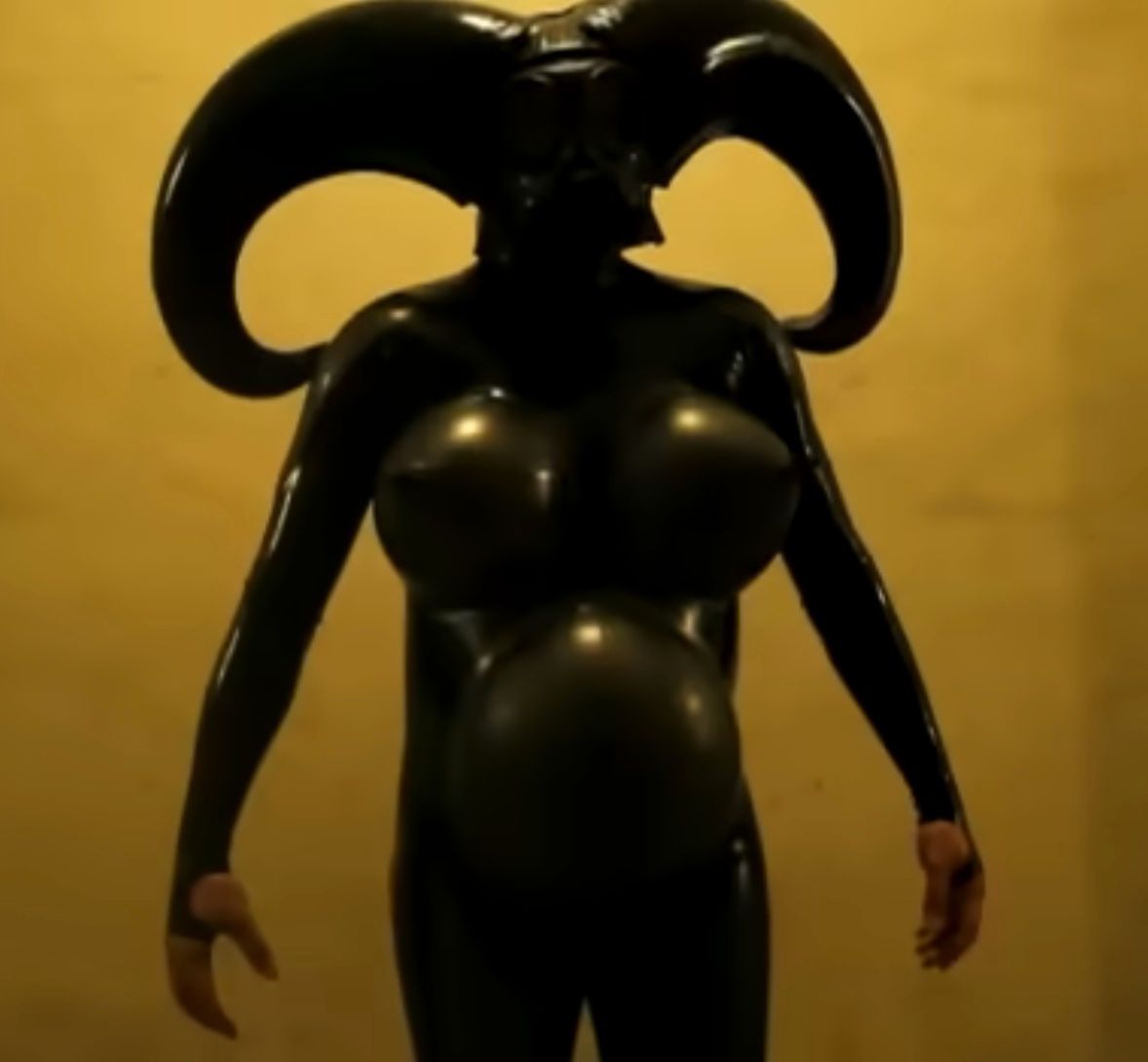
The sexually charged BDSM imagery belongs to this same architecture. It is not meant to arouse. It is meant to expose the tension between the body’s instinctual forces and the spirit’s higher-dimensional awareness. The masks, restraints, and power dynamics become metaphors for the ways the ego binds itself, the ways the subconscious exerts pressure, and the ways the body asserts its biological reality. Jung taught that the Shadow contains not only fear and aggression but also instinctual drives, including sexuality. Hurricane does not hide this. It shows the human being caught between the raw biological impulses of the 3D body and the higher-dimensional longing of the 4D spirit. The imagery becomes a confrontation with the parts of the psyche that polite society suppresses. It becomes a symbolic representation of the forces that must be integrated rather than denied. In Lark Lauren’s metaphysical framework, this is the moment the spirit realizes it cannot bypass the body. It must descend fully into it, including its instinctual layers, before transformation can occur. The ego is shocked, intrigued, maybe disturbed; the soul is being shown its own imprisoned energy.
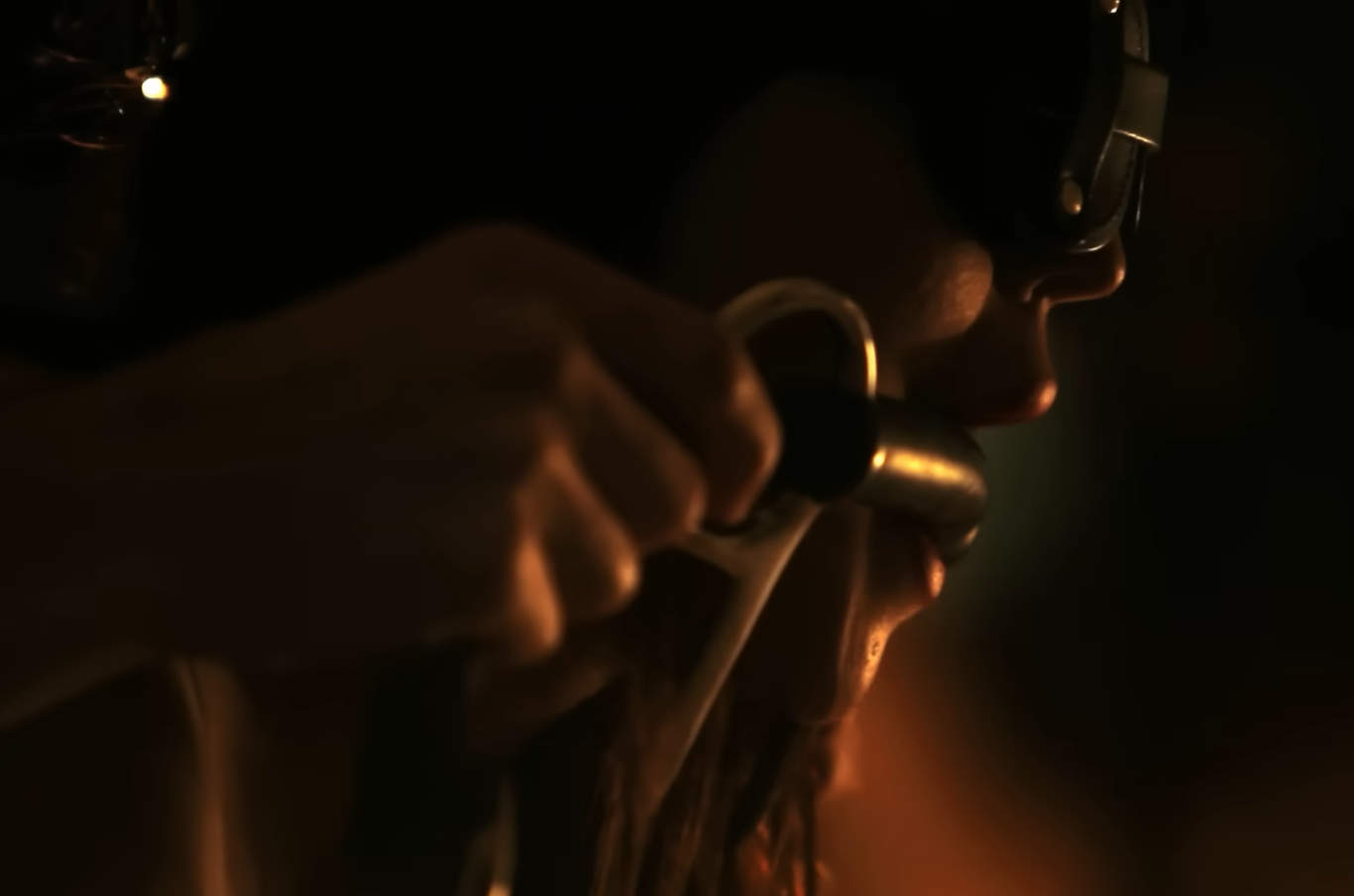
In one several of the Bartholomew Cubbins vide's frames, the explicit physical restraint and sensory deprivation operate as a visual metaphor for the ego's self-imposed confinement. The gag and headgear do not merely represent outward dominance; they externalize the internal silencing of instinctual forces and the suppression of raw biological reality. By bringing these taboo BDSM dynamics into the light, the narrative forces a direct confrontation with the instinctual layers of the Shadow, proving that spiritual ascension cannot occur by bypassing the physical vessel. It requires descending directly into its bound and suppressed aspects.
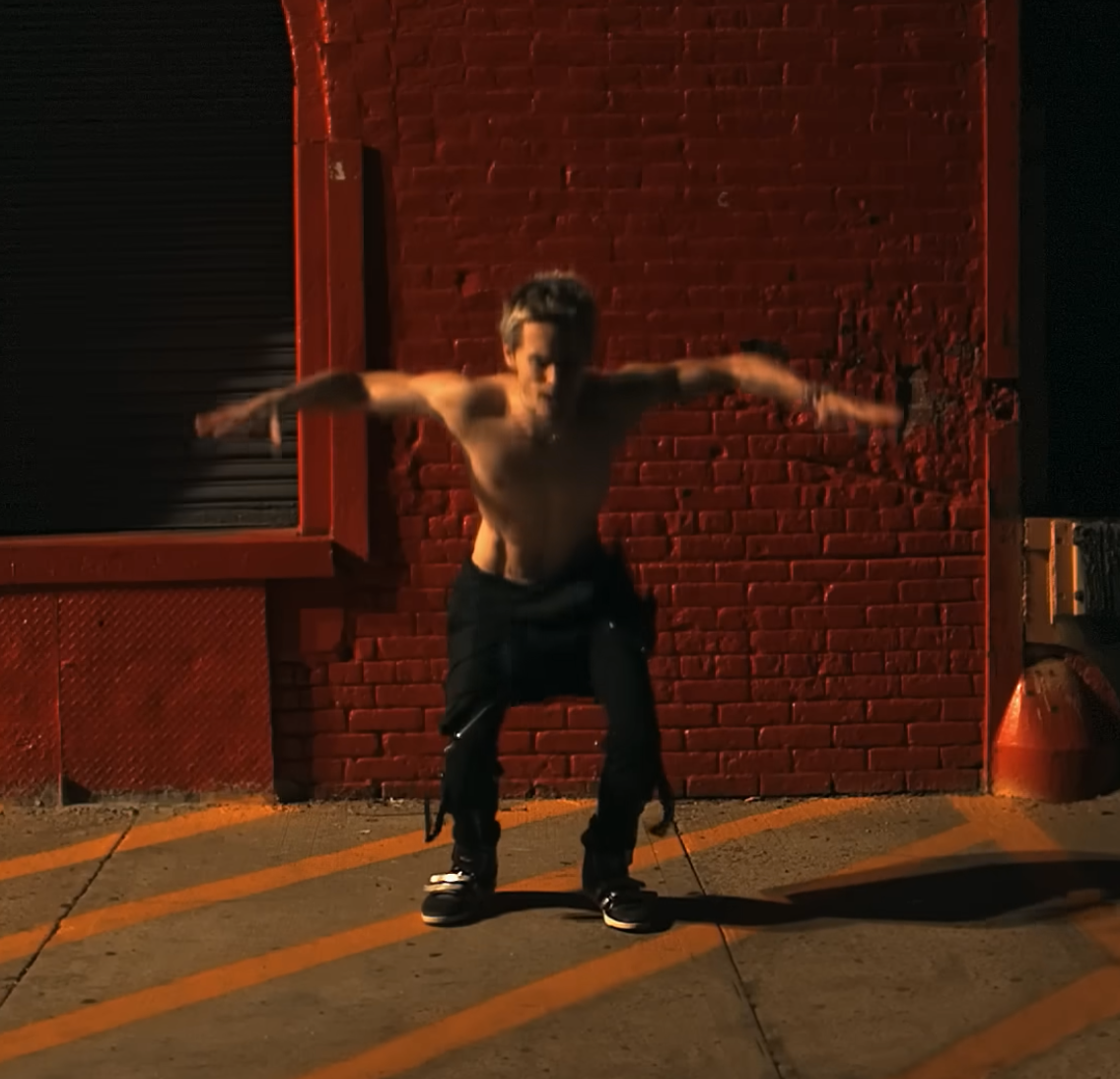
The fall becomes the natural consequence of this confrontation, the moment the ego’s last illusion of control gives way. Up to this point, speed and momentum have functioned as escape strategies, attempts to outrun the Shadow before it closes in. But true transformation demands the collapse of these defenses. When the fall occurs, it suspends the initiate in a precise, vulnerable instant between motion and impact, where mastery dissolves and surrender becomes unavoidable. Framed against raw brick and yellow lines, the mid‑air crouch captures the entry into Nigredo: the voluntary drop into darkness where the old identity must break open so that something enduring can finally be forged.
The exhilaration of the motorcycle run is the opposite pole of the same instinctual force. Speed becomes the attempt to outrun the Shadow, to outrun the Devil, to outrun the fall. The rider tears through the city, the engine roaring, the frame vibrating, the night blurring into streaks of light.
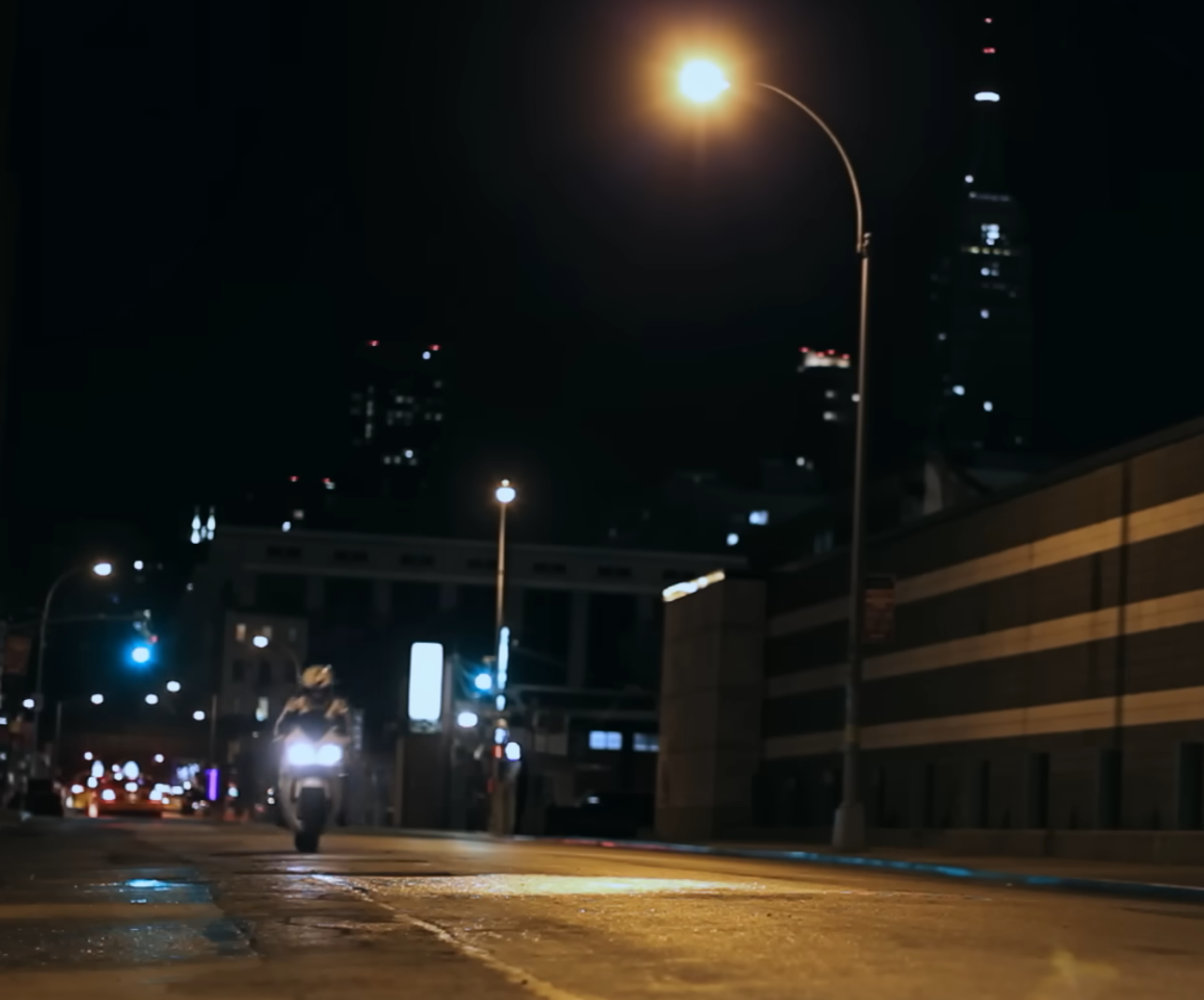
On the surface, it is pure adrenaline, a cinematic thrill. But metaphysically, it is the spirit trying to escape the consequences of incarnation, trying to outrun its own unconscious. The hurricane is internal. The Devil is internal. The Shadow is internal. The rider is not escaping anything. He is accelerating toward the confrontation.
The man with the hammer is the archetype of destruction. He stands in the street, dressed in a suit, face masked, holding a sledgehammer horizontally across his body.
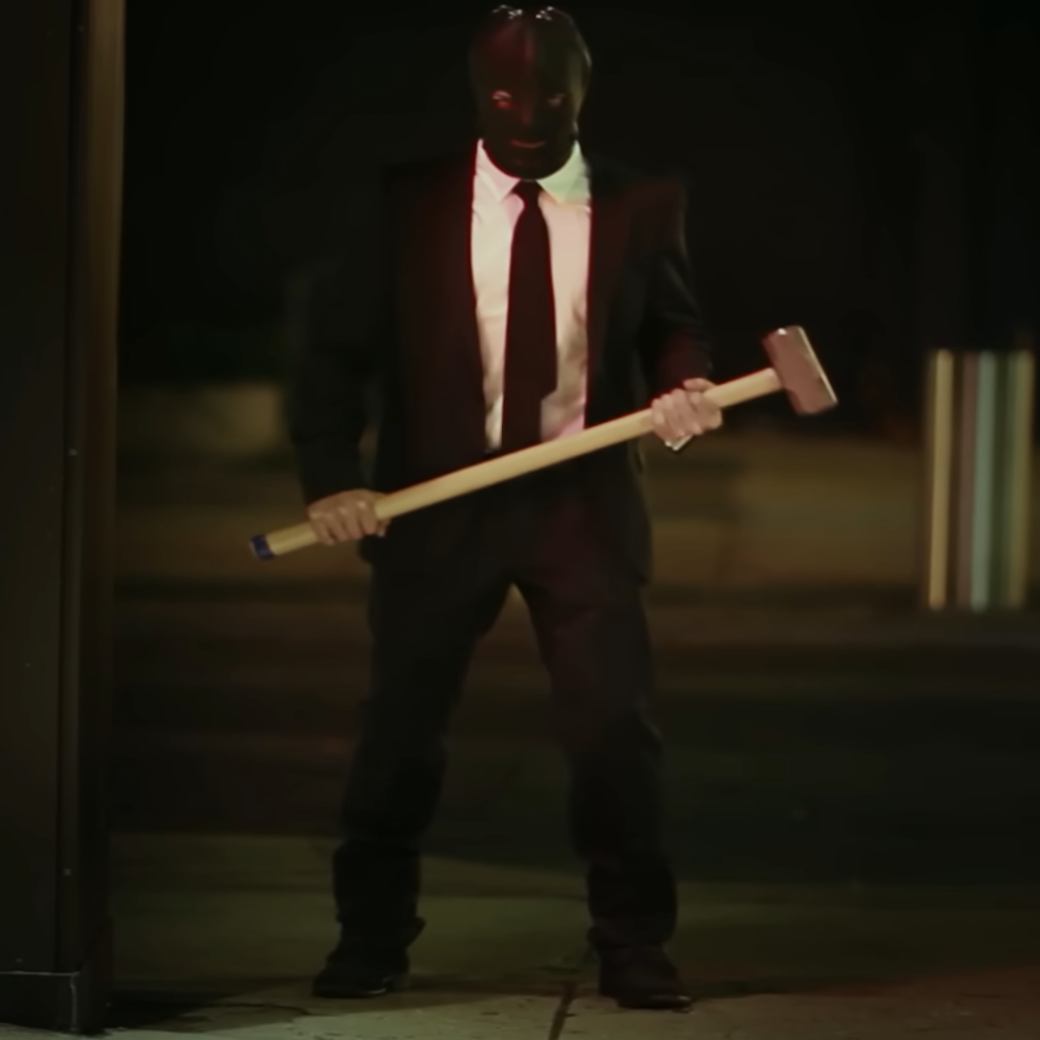
He is the Devil as the destroyer of illusion. He is the force that breaks the ego’s shell. He is the alchemical principle of dissolution. He is Solve. He is the necessary violence of transformation. The ego sees a threatening figure, a cinematic villain. The soul sees the force that will eventually shatter its false identity.
The oppression of the bunny-costumed model is the confrontation with vulnerability. In the subway entrance scene, a figure in glossy black, with high boots and cat-like ears, stands in a gritty urban environment.
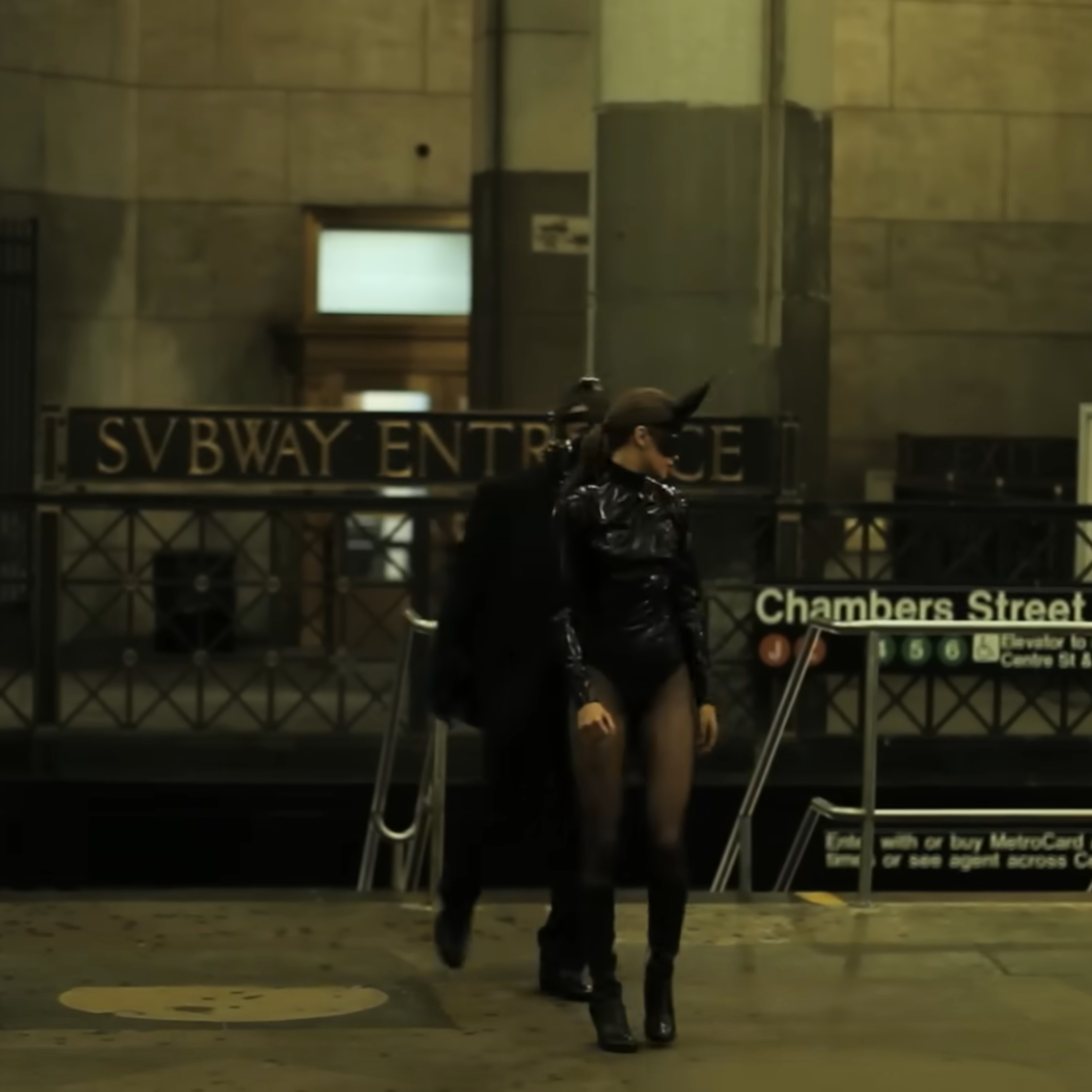
The bunny or cat-eared persona represents innocence, softness, the anima, the emotional body dressed in fetish armor. The masked aggressor who confronts her represents the Shadow’s dominance.
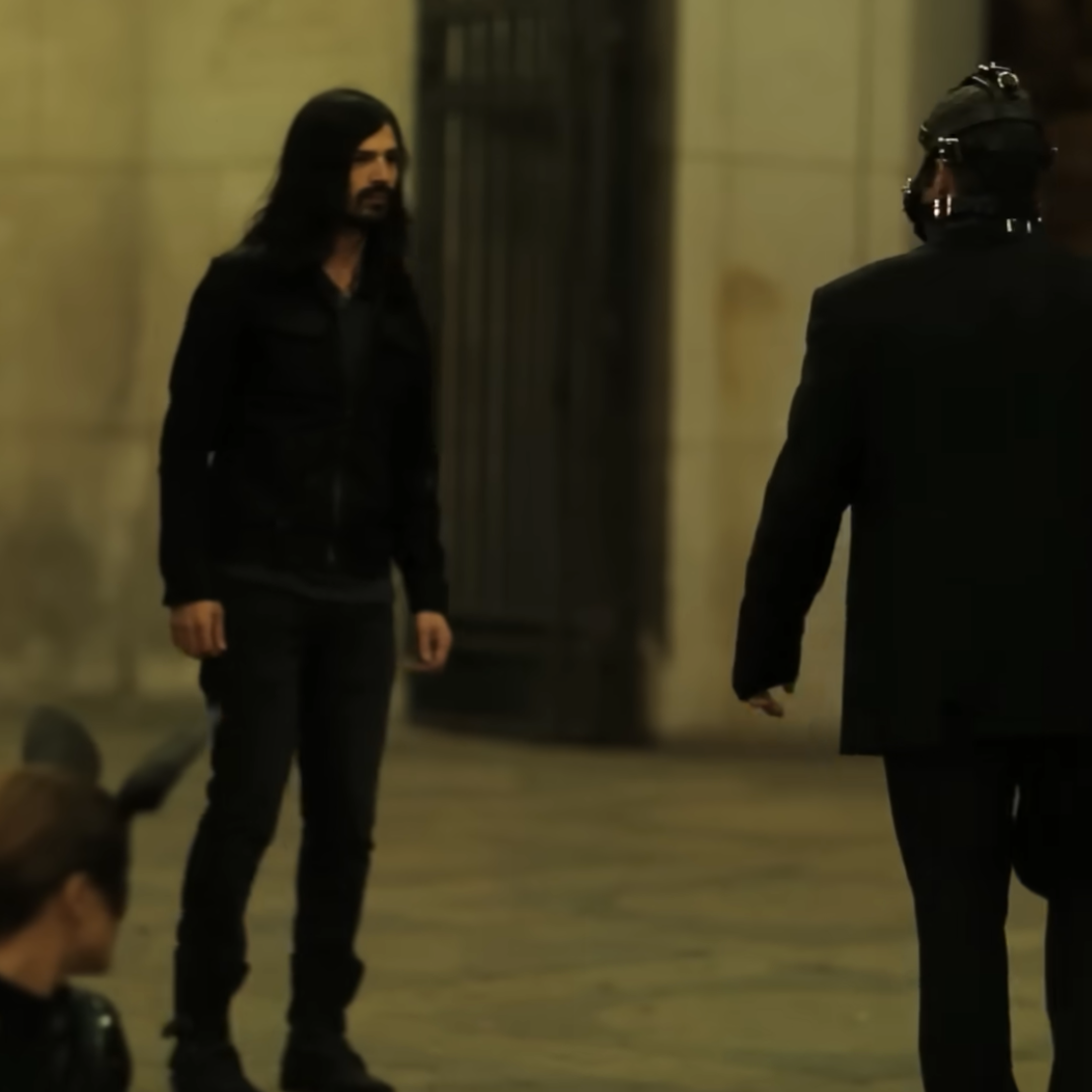
Kneeling to kiss the bunny figure, the “savior” reinforces that once fear is removed, the “monsters” and “creatures” of the subconscious lose their threatening power. The initiate no longer sees a mask to be feared, but a part of existence to be embraced and reconciled.
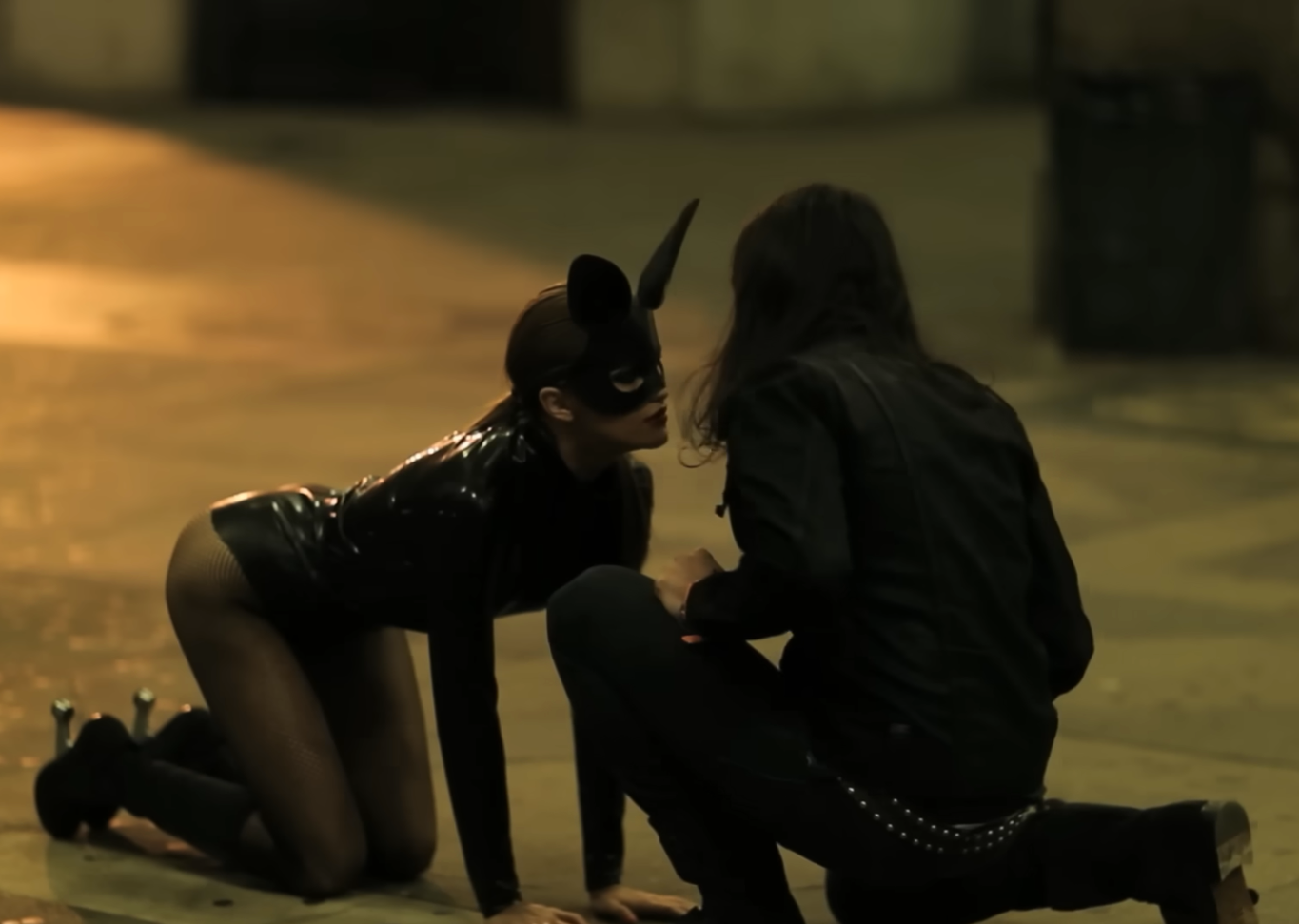
The Jesus-like savior fighting for her is the higher self intervening in the subconscious battle. He is not Christ in a doctrinal sense. He is the symbolic form of the 4D witness entering the 3D conflict. He fights not to rescue her from an external villain, but to rescue her from the internal bondage of fear, repression, and self-abandonment. The ego sees a dramatic rescue scene. The soul sees its own higher aspect stepping into the nightmare.
And then the film reveals one of its most metaphysically charged images: the quartet symphony. In an ornate hall with arched ceilings and warm light, four musicians sit in a semicircle, playing string instruments. It is quartet of "saviors".
The “four saviors” are the same being, expressed in four simultaneous aspects, each representing one quadrant of the higher-dimensional self. In Lark Lauren’s metaphysical architecture, this is the moment the 4D Witness becomes visible inside the 3D frame.
The ego sees four men playing instruments. The soul sees its own multidimensional nature finally harmonized.
The quartet is the Symphony of Coming Home made literal.
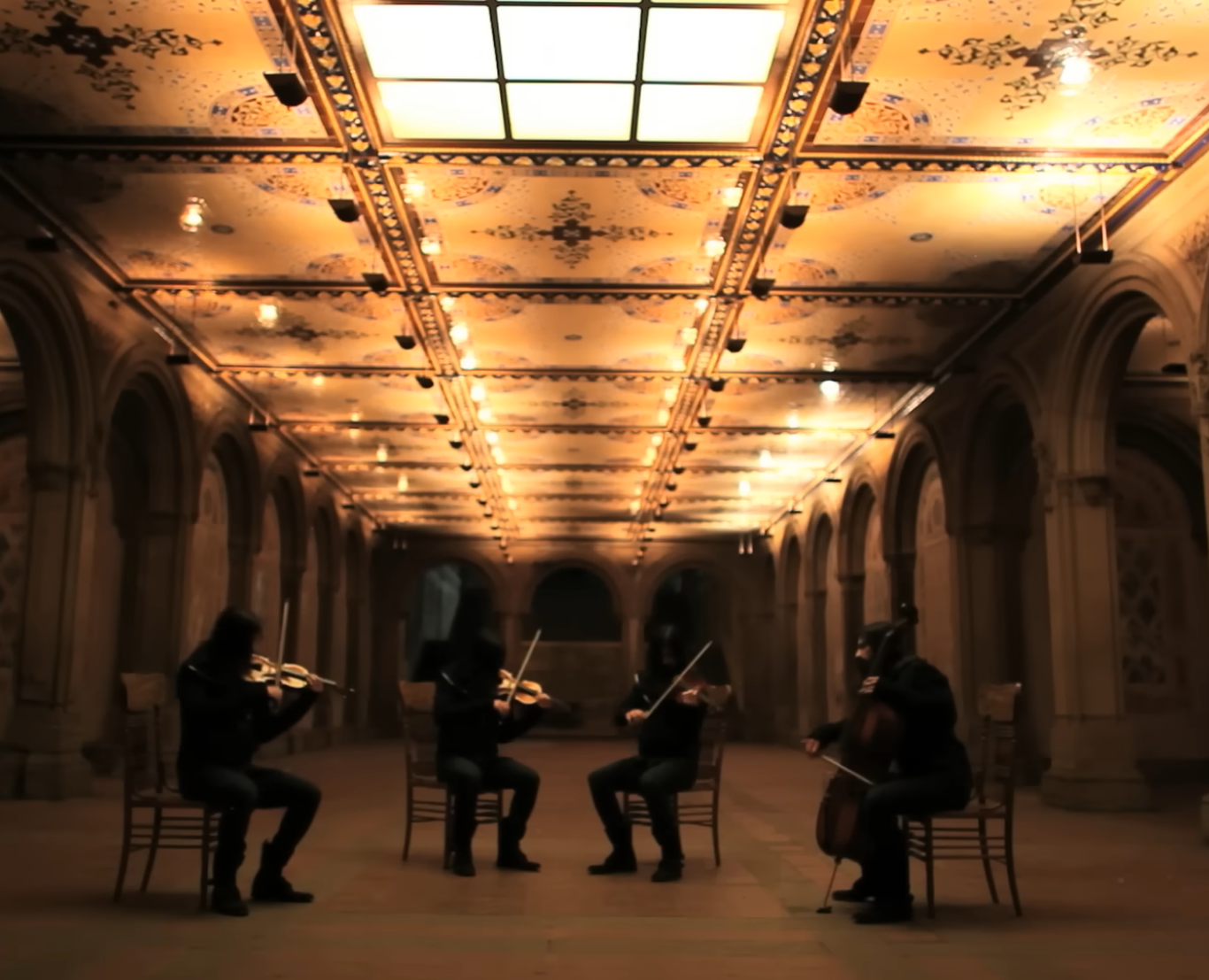
The same savior who fought in the alley, who confronted the masked oppressor, who intervened for the bunny, now appears seated, playing violin and cello with three other versions of himself.
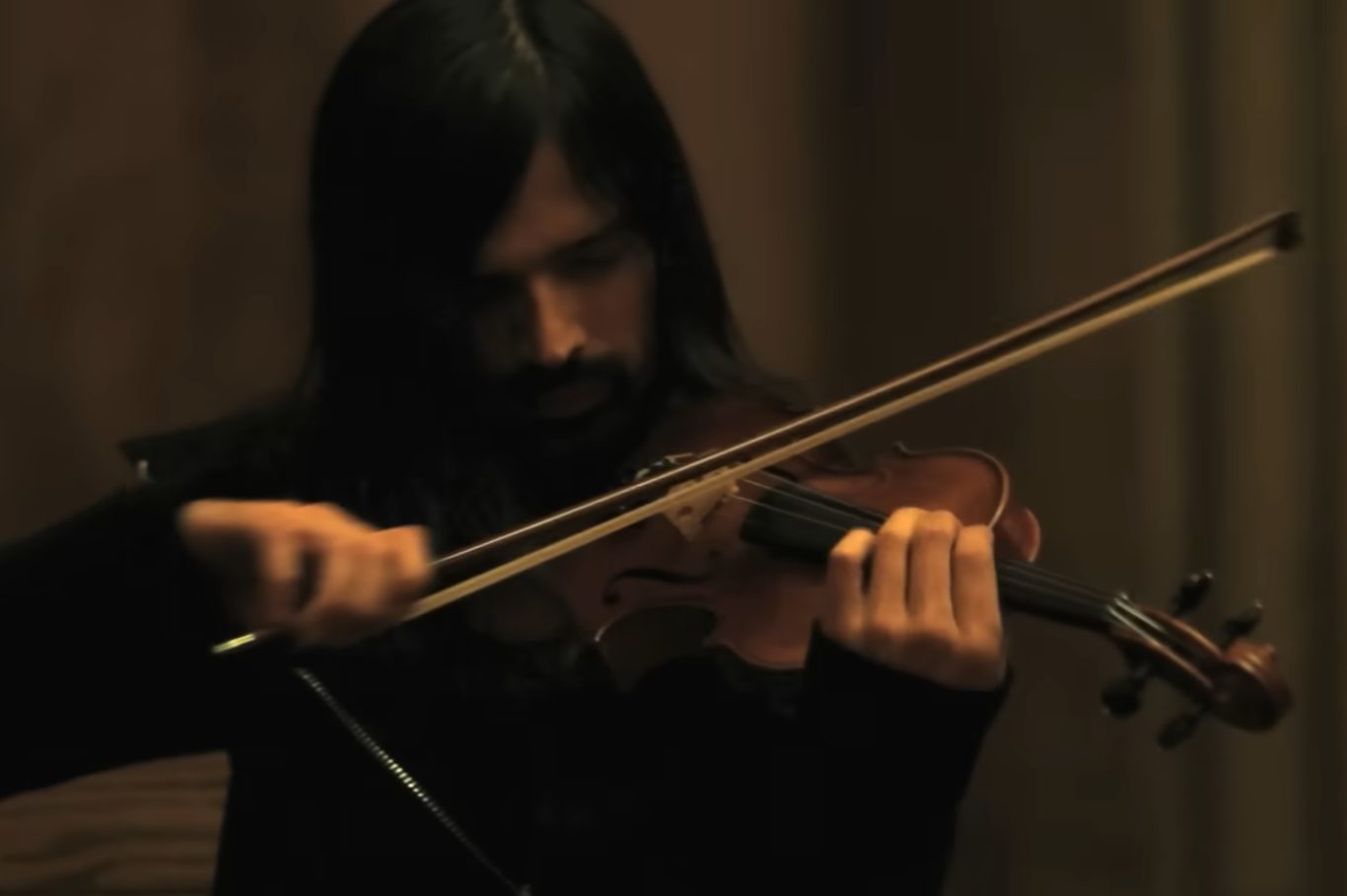
Lorem ipsum dolor sit amet, consectetur adipiscing elit. Nulla euismod condimentum felis vitae efficitur. Sed vel dictum quam, at blandit leo.
This is not a decorative performance, but the metaphysical revelation of the higher self’s true nature. The savior is not only a fighter. He is harmony. He is order. He is coherence. He is the architect of balance. The quartet becomes the symbolic representation of the four-dimensional field expressing itself through art, through sound, through structure. Music becomes the bridge between dimensions. It becomes the vehicle through which the higher self stabilizes inside the body.
This scene is the cinematic twin of Lark Lauren’s The Symphony of Coming Home. In that work, the moment of awakening is described as a symphony running gentle through the body and soul, a harmonizing energy telling the fallen consciousness, “You are coming home.” The quartet in Hurricane is the same metaphysical event expressed visually. It is the moment the 4D witness begins to orchestrate the 3D vessel. It is the moment the inner chaos becomes music. It is the moment the hurricane becomes harmony. It is the moment the savior becomes the conductor of his own multidimensional self. It is the moment the descent begins to reverse. It is the moment the spirit begins to come home. The ego hears beautiful music. The soul hears its own structure being tuned.
The key scene is the moment of transmission. Two hands hold a small metallic key attached to a red string.
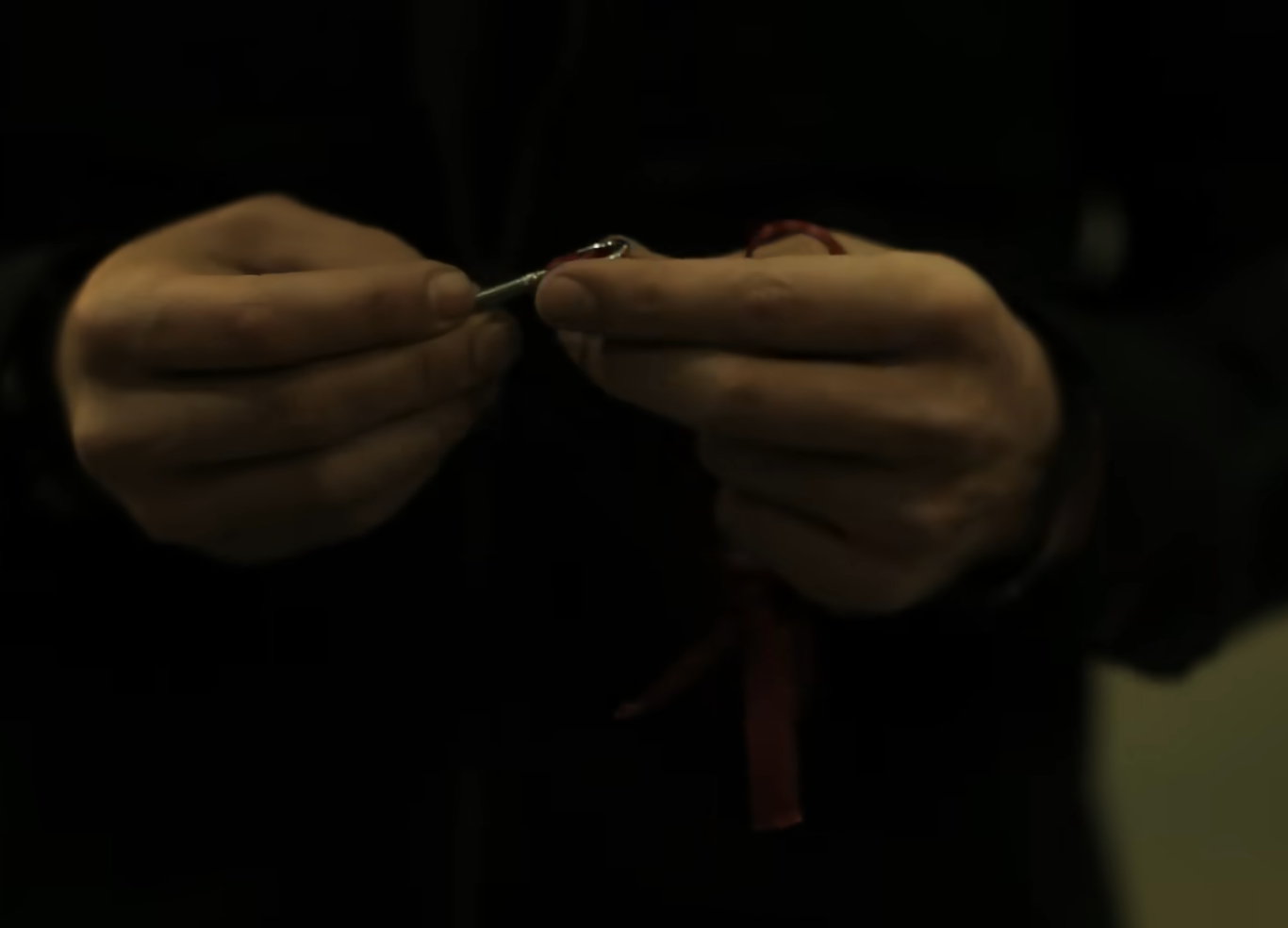
The key represents access, initiation, permission, sovereignty. When the key is transferred from one hand to another, it symbolizes the passing of inner authority. It is the moment the ego relinquishes control and the higher self takes over. It is the moment the vessel becomes ready for transformation. The ego sees a mysterious object. The soul recognizes the moment it agrees to open itself.
And later, the book appears - a leather-bound, locked volume. In one frame, the "savior" kneels on the ground, reaching toward its closed brown case, wearing dark clothing and a bright orange wrist device.
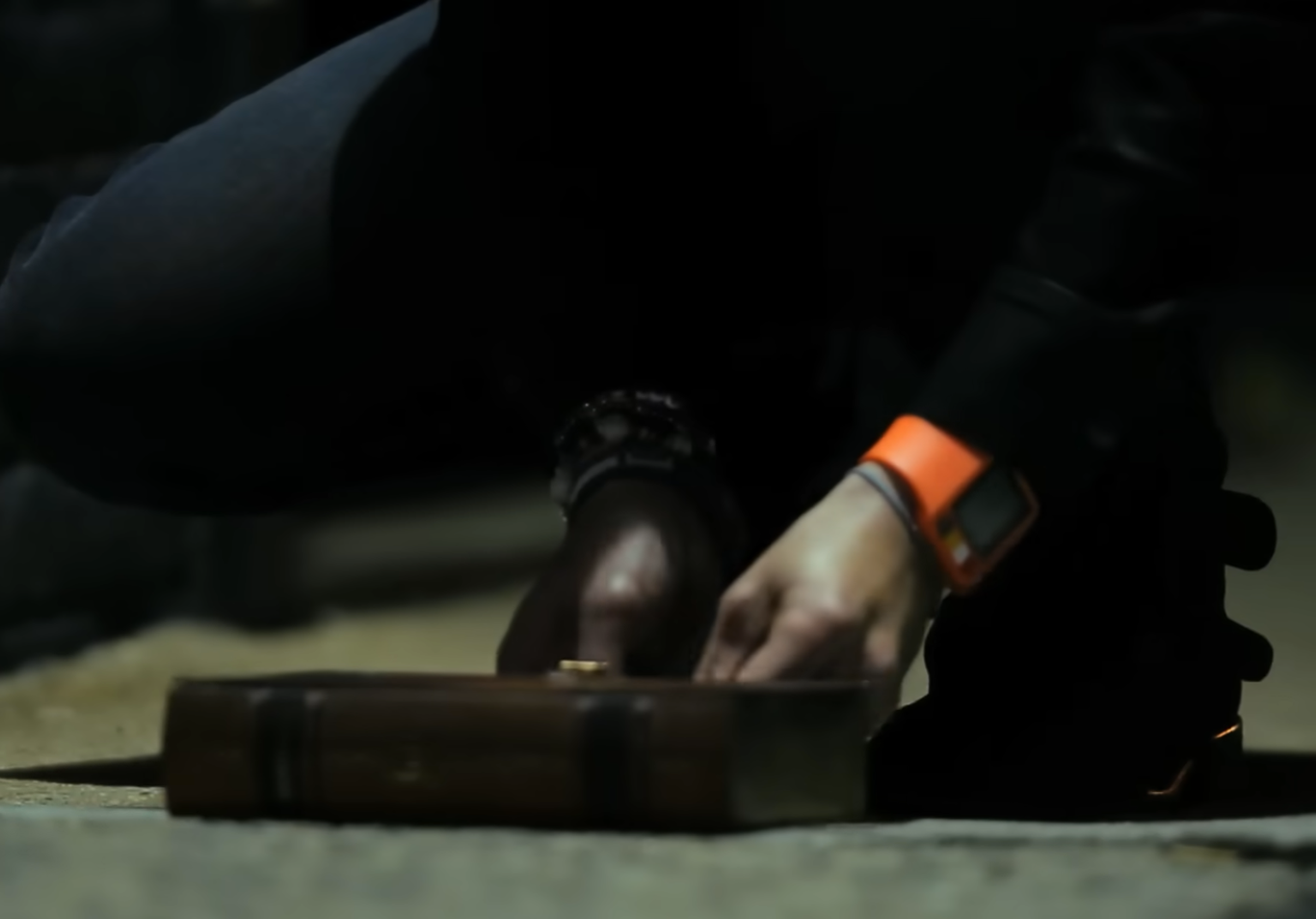
This is the Liber Novus, the Book of Life, the Akashic Record, the Red Book, the soul’s blueprint. A book represents structured knowledge, divine law, memory, revelation. When locked, it signifies veiled truth or esoteric knowledge inaccessible to those still trapped in fear and projection. The key does not belong to a hero who fought external enemies, but to the initiate who unmasked their own Shadow. The key fits the lock only after the internal battle is complete. Truth cannot be taken by force or intellect; it yields only when the observer is psychologically ready to receive it.
The figure opening the book wears a bright orange digital watch - a tracking device, a matrix monitor, a symbol of the 3D constraints still binding the initiate.
The contrast between the antique, ritualistic book and the modern electronic watch reveals the dual nature of awakening. You do not escape the physical world to find truth. You unlock the divine light while still wearing the machinery of time. You open the Book of Life on the pavement, not in a temple. You awaken inside the matrix, not outside it. The ego sees a cool prop. The soul sees the revelation that enlightenment happens in the middle of ordinary life.
The ultimate revelation is non-conceptual. Written words can be distorted into secrets and lies or empty prayers, but the raw light represents pure, unconditioned awareness - the Prima Materia, the divine spark within. The figure opening the book is not an external savior. He is the awakened self. By taking the key, opening the book, and claiming the light, the individual saves themselves from the perpetual nightmare of the subconscious hotel. The ego sees a supernatural effect. The soul recognizes its own core.
The knife scene is the confrontation with mortality.
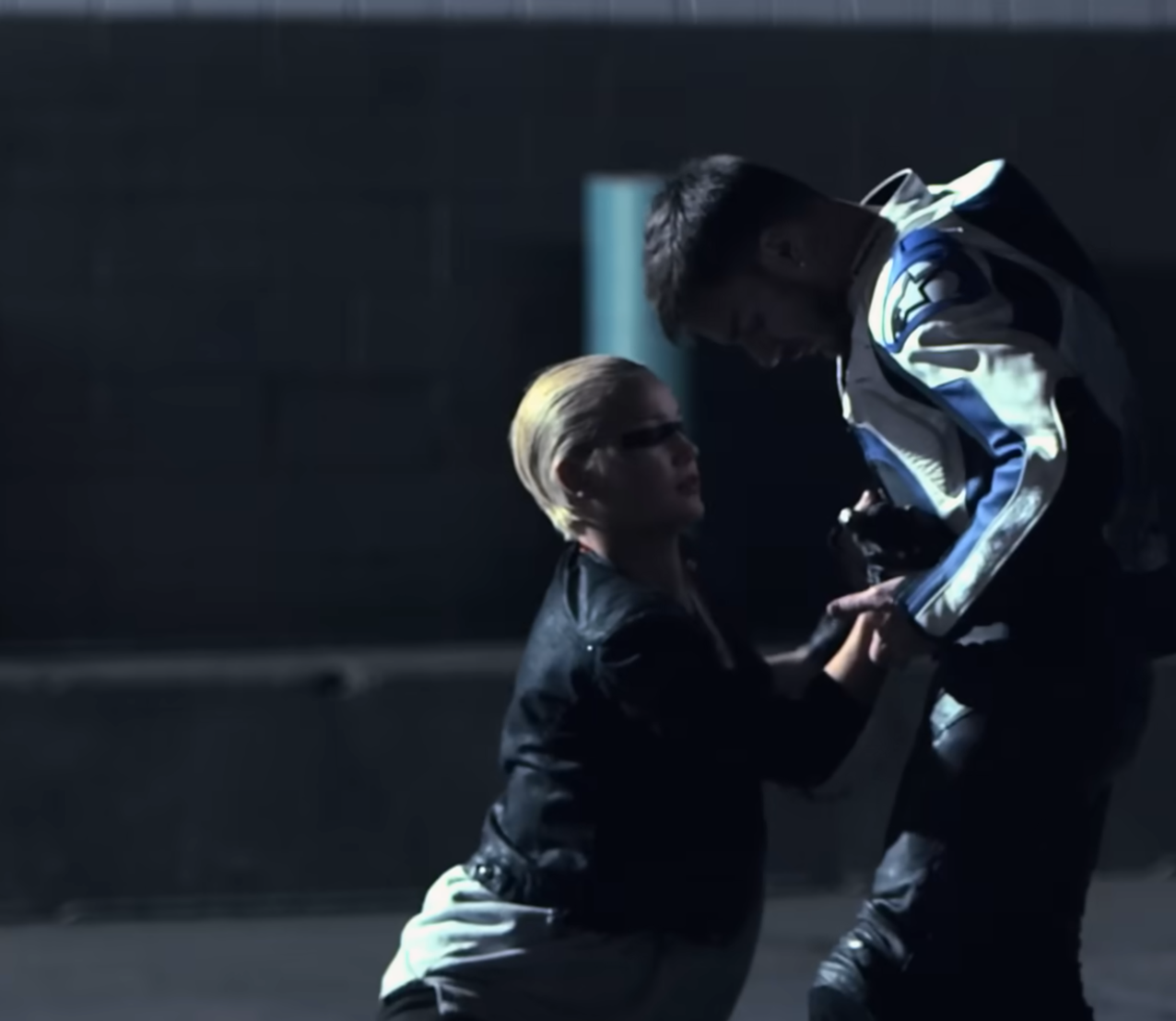
The blade, represents the edge between life and death, between ego and spirit, between illusion and truth. It is the moment the initiate realizes that transformation requires sacrifice. Something must die. Something must be cut away. Something must be surrendered. The ego sees danger. The soul sees the threshold.
The fire inside the heart, about to explode into flames, is the ignition of inner sovereignty. The lyrics declare: There is a fire inside of this heart and a riot about to explode into flames. This is the moment the spirit begins to burn through the density of the body. It is the moment the 4D field begins to push upward through the 3D frame. It is the moment the hurricane becomes internal combustion. The ego hears intensity. The soul feels ignition.
The coffin sequence is the esoteric climax. In a stone-columned space, coffins draped with American flags line the ground, and a masked figure raises a large hammer over the shirtless initiate falling backward.
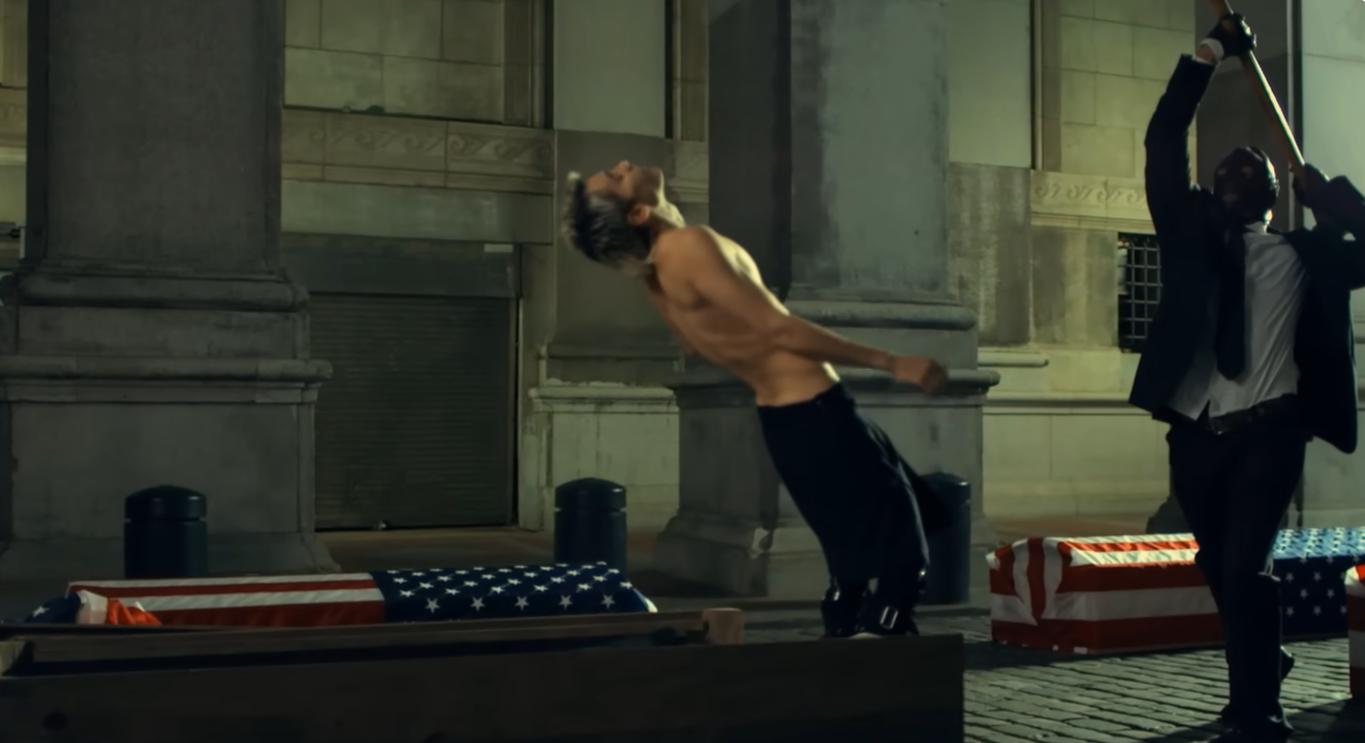
In every mystery tradition, the initiate is placed inside a coffin before receiving illumination. The coffin shuts down sensory perception. It becomes the Chamber of Reflection, the dark night of the soul. It pressurizes emotional and physical energies. The ego panics. The subtle body begins to separate. The coffin becomes the Athanor, the alchemical furnace where the old identity dies. This is not symbolic in a vague way. It is mechanical. The coffin forces the ego into panic so the deeper consciousness can break free. This is the same initiatory death described in Lark Lauren’s metaphysical architecture: the moment the 4D self breaks through the 3D shell. The ego sees a shocking, political, violent image. The soul sees its own death ritual.
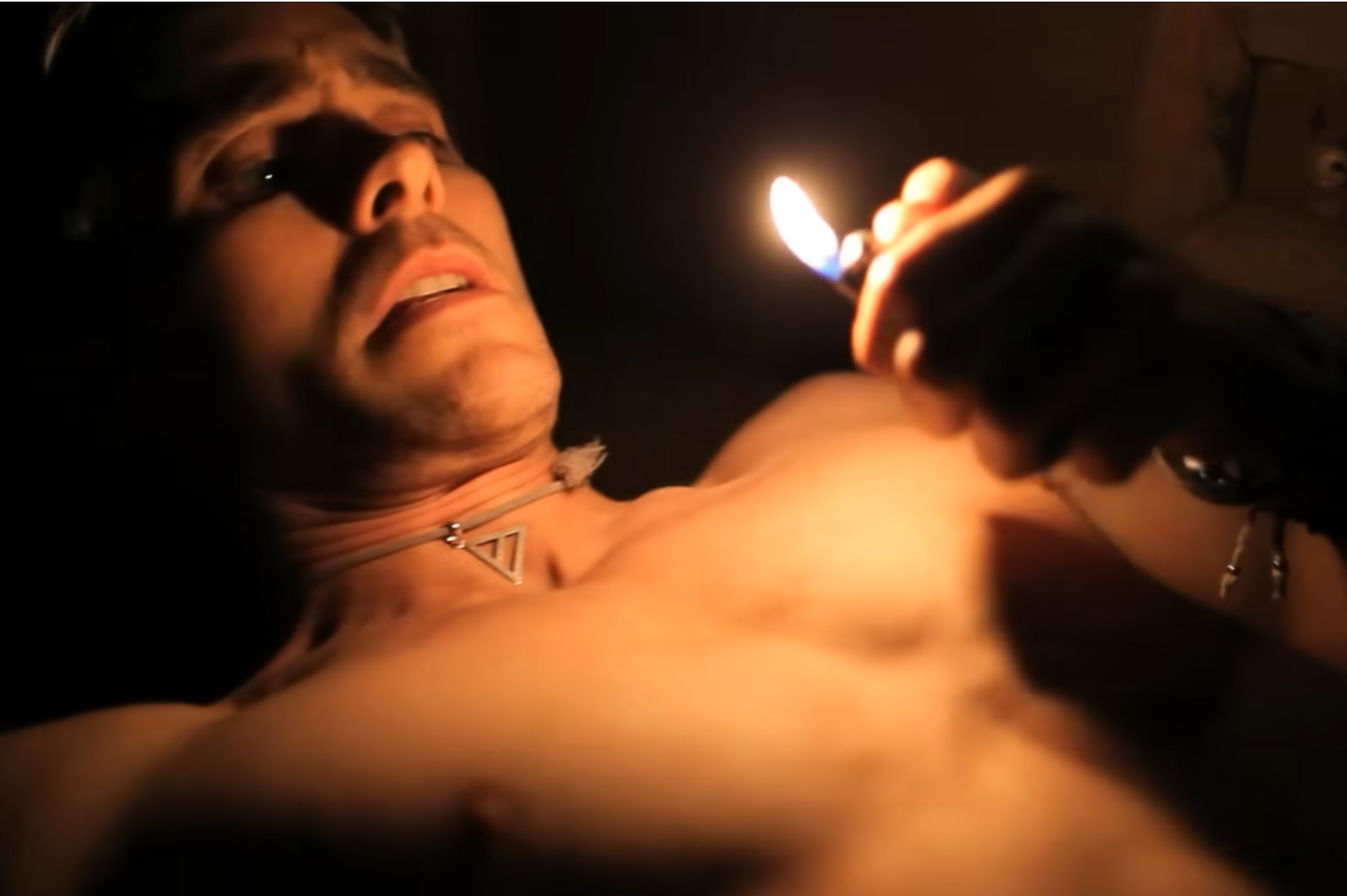
Trapped within the suffocating enclosure, the initiate strikes a single flame in the pitch darkness. Thisa striking visual representation of the Athanor or Chamber of Reflection. As physical senses are cut off and the ego enters panic, this solitary spark becomes the fragile witness of higher consciousness awakening inside the dark night of the soul. The coffin scene forces the complete death of the 3D identity, utilizing claustrophobic pressure so the 4D self can break through the shattered ego shell.
The Death Chapter, where children draw with chalk on the floor, is the rebirth. In a narrow alley at night, three figures kneel on the pavement, drawing and writing with colorful chalk, the ground covered in arrows, shapes, words, and symbols.
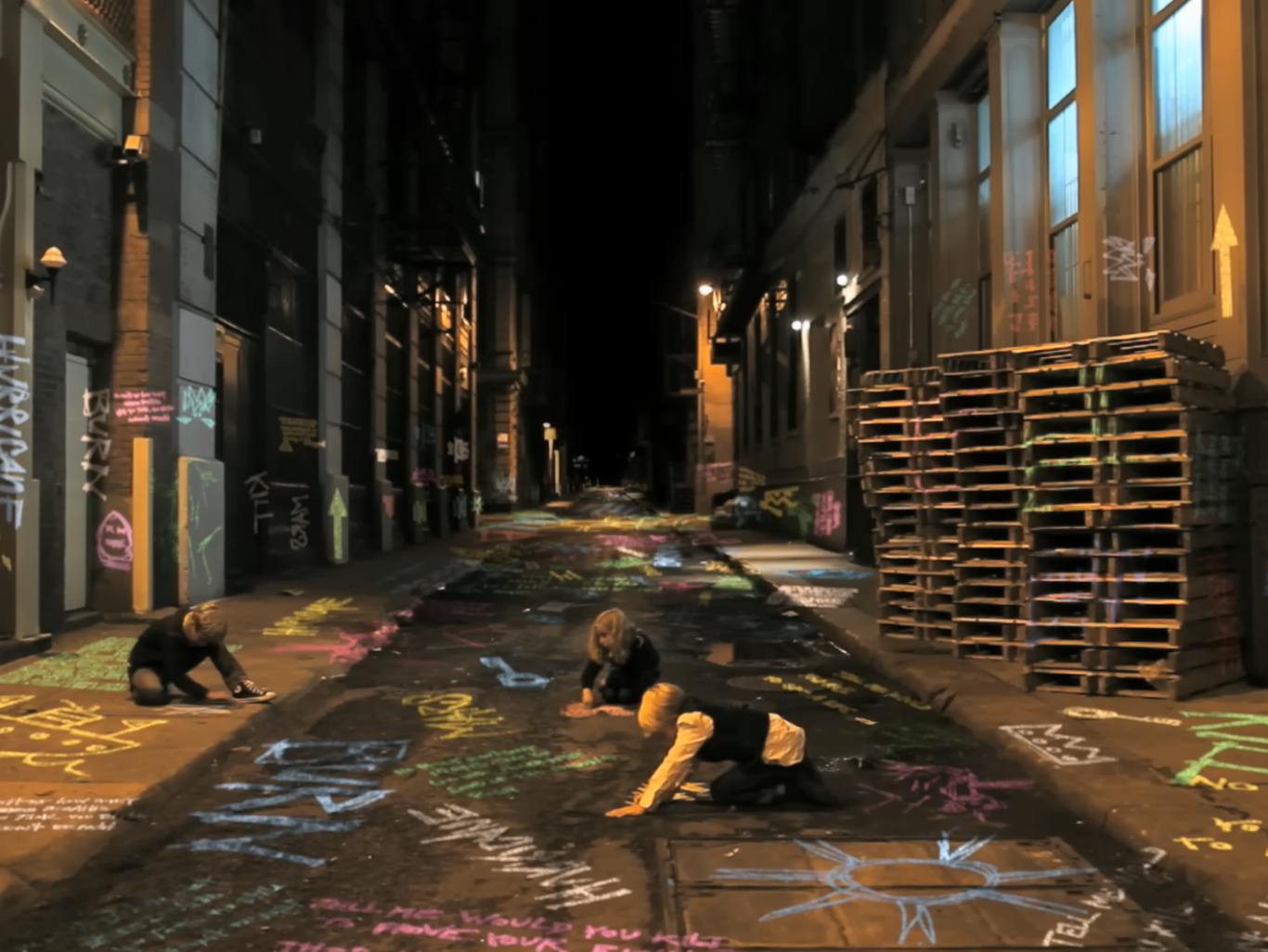
The chalk drawings represent innocence, creativity, the return to origin. They represent the new foundation upon which the transformed self will build. They represent the beginning of the new life. They represent the moment the hurricane ends and the new world begins. The ego sees street art. The soul sees its own new language.
And then the body emerges - shirtless, illuminated, covered in handwritten script, geometric sigils, and lyrics. In one frame, he stands in the middle of a dimly lit alley, arms relaxed, torso and arms covered in words and symbols, a black triangle drawn over the chest.
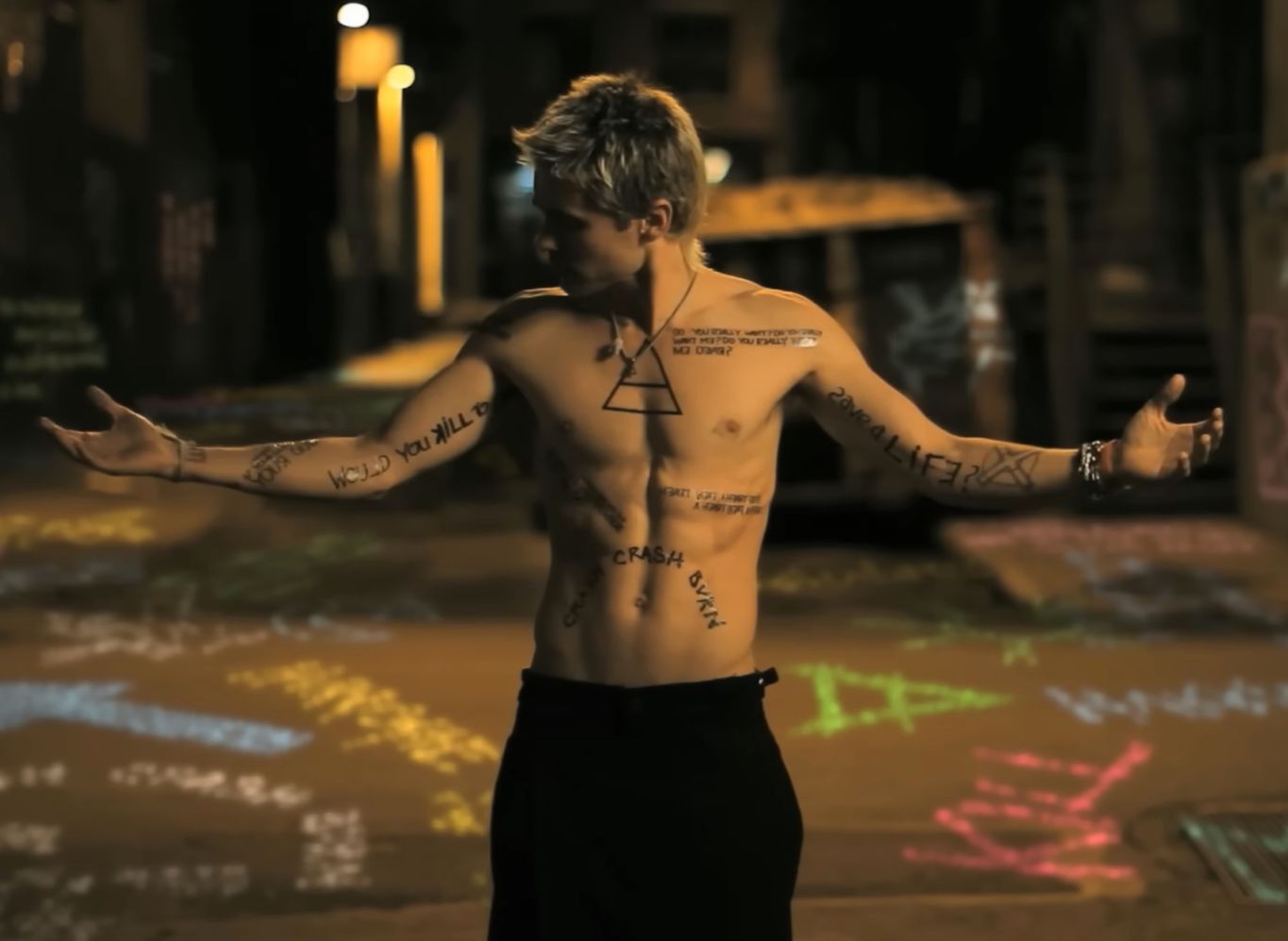
In another, he stands with arms outstretched, back turned, a bold black arrow running up the spine toward the word HURRICANE, with CRASH and BURN! written across the shoulder blades, chalk writing all around.
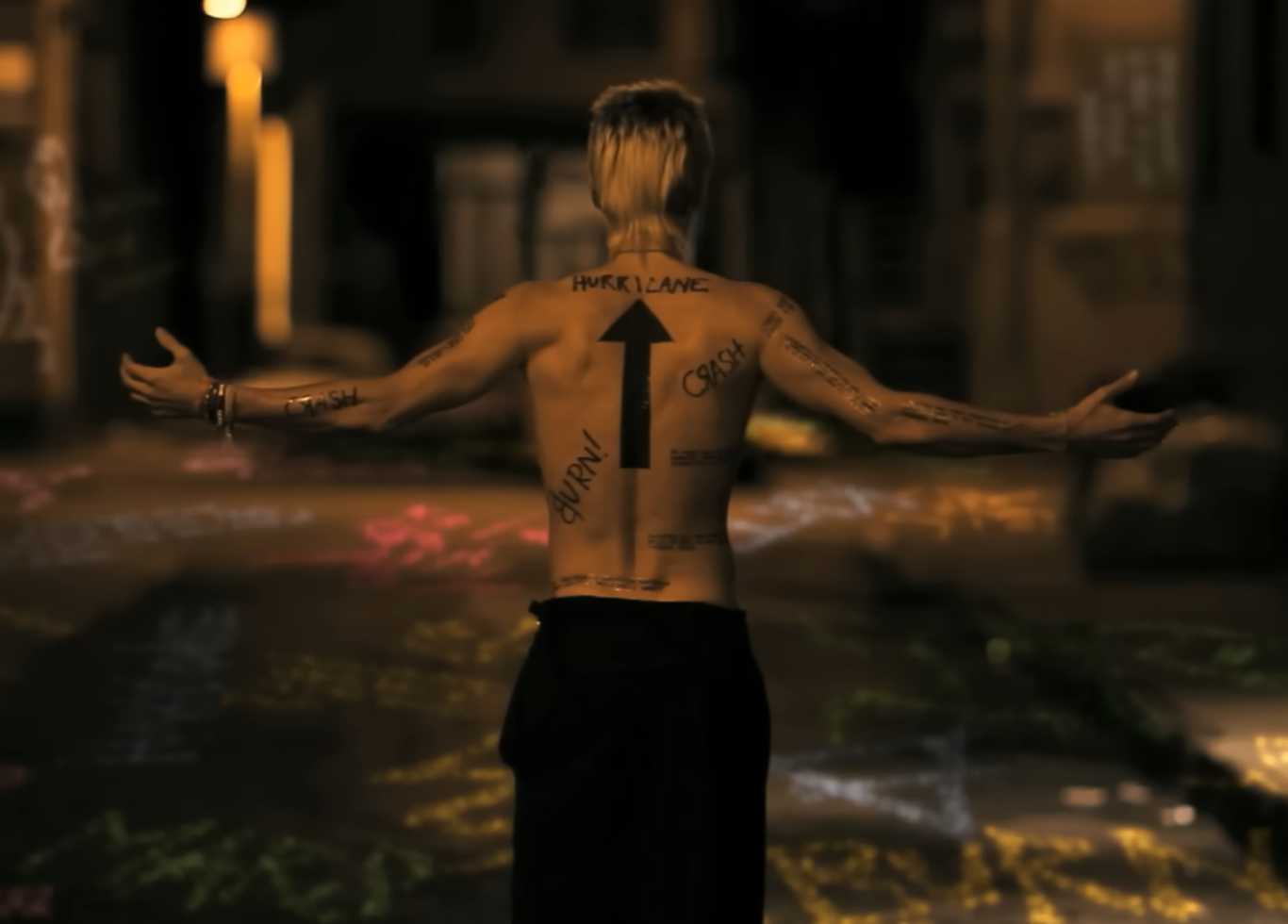
These markings do not start out on his body; they manifest as physical scars of realization earned throughout the journey. They appear only after he escapes the subterranean hotel and stands in the open street with arms outstretched.
CRASH / BVRN is inked across the midsection, anchored at the physical center of the body. WOVLD YOV KILL TO curves down the right inner arm, inscribing the central moral paradox onto the limb. BEAUTIFUL sits on the same arm, pairing destructive power and aesthetic creation on the same instrument. SAVE 4 LIFE? and geometric glyphs mark the left arm. The alchemical triangle sits centered on the sternum, grounding sacred geometry over the heart. Script lines across the left chest bear the song’s central interrogations: Do you really want me dead or alive to torture for my sins? Do you really want me dead or alive to live a lie? An ascending arrow runs up the spine toward HURRICANE, signaling the rising of Kundalini energy. CRASH and BVRN frame the shoulder blades, splitting impact and fire across the back.
These are not decorative tattoos, but earned markings. They are the alchemical residue of the trial. As he endured the coffin, the Shadow combat, the breakdown, the revelations bled outward, transforming abstract insight into physical skin tissue. The vessel became the map. The body became the text. The inscriptions are the defense against spiritual amnesia. Emerging from the subterranean darkness into the city, the initiate faces the ultimate danger: returning to daily 3D reality and forgetting what he learned in the abyss. Writing directly onto the skin ensures that the revelations of the Nigredo stay permanently etched onto the physical vehicle. His body has been transformed from an unconscious target in the hotel into a fully integrated, conscious canvas. The ego sees cool body art. The soul sees its own scripture.
The Devil appears throughout the film, but only as a mask, a horned archetype, a goat-headed hunter moving through the corridors of the subconscious hotel. He is not Satan. He is the Shadow. He is the unintegrated 3D self. He is the instinctual body resisting the descent of the 4D witness. He is the force of bondage, the force of fear, the force of repression, the force of desire, the force of illusion. He is the Devil of Tarot, not the Devil of dogma. He is the Baphomet of duality, not the Satan of theology. He is the Goat, the Beast, the Mask, the Mirror. When Jared finally defeats him and pulls off the mask, the film reveals the truth: the Devil is his own face. The Devil is the part of him he has been running from. The Devil is the part of him he must integrate. The Devil is the part of him that becomes power once unmasked. The ego sees a twist. The soul sees its own Shadow revealed.
LoreThe Spanish whispers are the subconscious voice guiding the initiate through the descent. Este no es el fin, es solo el comienzo. This is not the end, it is only the beginning. Destruir para crear. To destroy in order to create. Secretos y mentiras. Secrets and lies. Convertirse en una víctima de corazón. To become a victim of the heart. These whispers are the voice of the Subconscious Architect. They reveal the mechanics of transformation. They explain that destruction is intentional. They explain that suffering is not meaningless. They explain that the death inside the hotel is the birth canal for the spirit. The ego barely notices them. The soul hears them clearly.
The French chapter headings create the macro-structure of the initiation. First Chapter: La Naissance. The birth. Third Chapter: La Vie. The struggle. Fourth Chapter: La Mort. The death. The whispered French lines deepen the architecture. Ceci n’est pas la fin, c’est le commencement. This is not the end, it is the beginning. Ouvre tes yeux. Open your eyes. La vie, la mort, l’amour, le désir. Life, death, love, desire. Abandonne-toi au plaisir, jeune fille, car il n’y a rien d’autre. Abandon yourself to pleasure, young girl, for there is nothing else. These lines reveal the traps, the illusions, the seductions, the dangers of the 3D plane. They reveal the forces that bind consciousness until they are understood and integrated. The ego hears stylish foreign phrases. The soul hears its own curriculum.
And then, at 12:41, the English voiceover speaks: This is the story of a dream that could never come true. This line is the final disillusionment. It is the moment the ego’s fantasy collapses. It is the moment the initiate realizes that the dream of perfect fulfillment inside the 3D plane is impossible. The ego believes it can construct a paradise out of matter, but matter is dualistic, volatile, impermanent. The dream cannot come true. The Persona cannot save you. The fantasy cannot hold you. The illusion cannot sustain you. The collapse of this dream is necessary. Only when the false dream dies can the initiate awaken to raw, unconditioned reality. Only when the dream collapses can the higher self enter. Only when the dream dies can the Devil be unmasked. Only when the dream dissolves can the hurricane become transformation.
This is the true meaning of Hurricane. It is the descent into matter, the confrontation with the Devil, the collapse of the dream, the death of the ego, the ignition of the inner fire, the burial in the coffin, the rebirth through chalk, the quartet symphony of the higher self, the unlocking of the Book of Life, and the final integration of spirit and body. It is the violent mechanics of purification leading to embodied divinity. It is the cinematic enactment of the Lark Lauren metaphysical architecture. It is the ritual technology that transforms the viewer. It is made that way: the exciting cinematic, shocking sequences keep the viewer hooked, but the whole is not what it seems. The video passes through the ego, revealing the deeper meaning to the soul. It is the hurricane that destroys in order to create.
Note on Visual Content: The accompanying short film for "Hurricane" depicts intense mature themes, psychological distress, and explicit visual content. Viewer discretion is advised.
Watch: Thirty Seconds To Mars — Hurricane (Official Music Video)
Attribution: Directed by Bartholomew Cubbins (Jared Leto) | Virgin / EMI Records (2010).
*All video stills and film screenshots featured in this article are taken from the short film "Hurricane" (Directed by Bartholomew Cubbins / Jared Leto), copyright © Virgin Records / Universal Music Group / Thirty Seconds to Mars. Imagery is included strictly for critical analysis, commentary, and educational purposes under Fair Use guidelines.
*Nigredo is the alchemical blackening, the first and most violent stage of transformation in which the old identity collapses under the weight of its own illusions. It is the descent into darkness where fear, ego, and shadow rise to the surface, forcing the initiate to confront everything previously denied or repressed. In Hurricane, Nigredo appears as the claustrophobic hotel, the masked figures, the Devil, the coffin, the breakdown, and the suffocating emotional pressure that strips the psyche bare; this stage is not meant to destroy the initiate, but to dissolve the false self so the vessel can be purified and prepared for the light that follows.
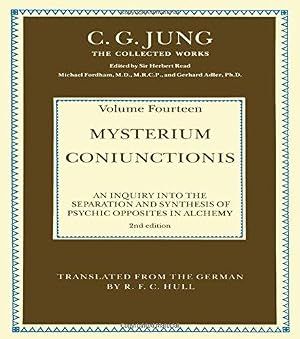
*Carl Jung described Nigredo in Psychology and Alchemy and Mysterium Coniunctionis as the moment when the psyche confronts its Shadow: the fears, impulses, and forgotten fragments that have been pushed out of awareness. For Jung, this stage is marked by confusion, depression, fragmentation, and the symbolic “death” of the ego. It is an inner night in which the familiar self dissolves so a deeper structure can emerge.
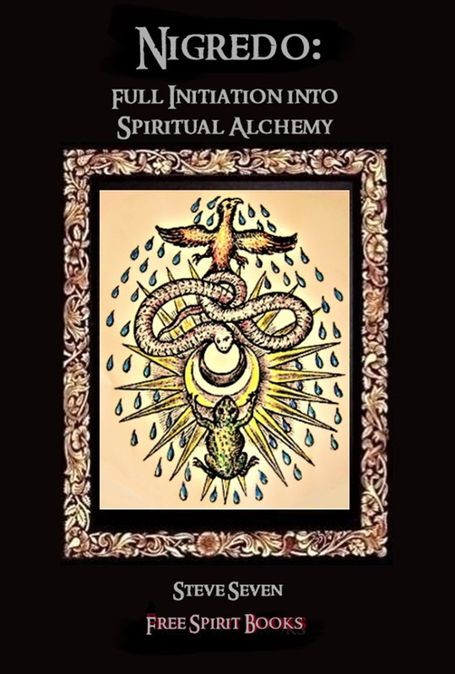
* In Steve Seven’s work on Nigredo, the descent is treated as a full initiatory ordeal: a necessary collapse that exposes the hidden architecture of the psyche and forces the practitioner to face what has been avoided. Nigredo is not destruction for its own sake; it is the purification through darkness that prepares the ground for the later stages of alchemical rebirth.
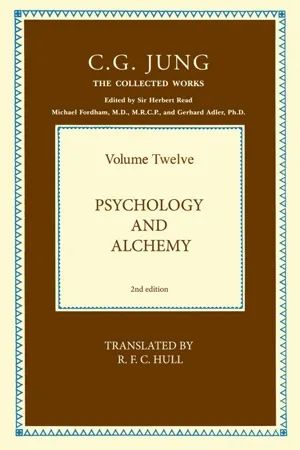
*Cover of Psychology and Alchemy by C.G. Jung, featuring a cream center panel framed by a brown and blue decorative border.
*Cover of Mysterium Coniunctionis by C.G. Jung, showing a cream panel bordered by brown and blue decorative patterns.
*Cover of Nigredo: Full Initiation into Spiritual Alchemy by Steve Seven, featuring an ornate border and an alchemical illustration with symbolic animals and radiant light.