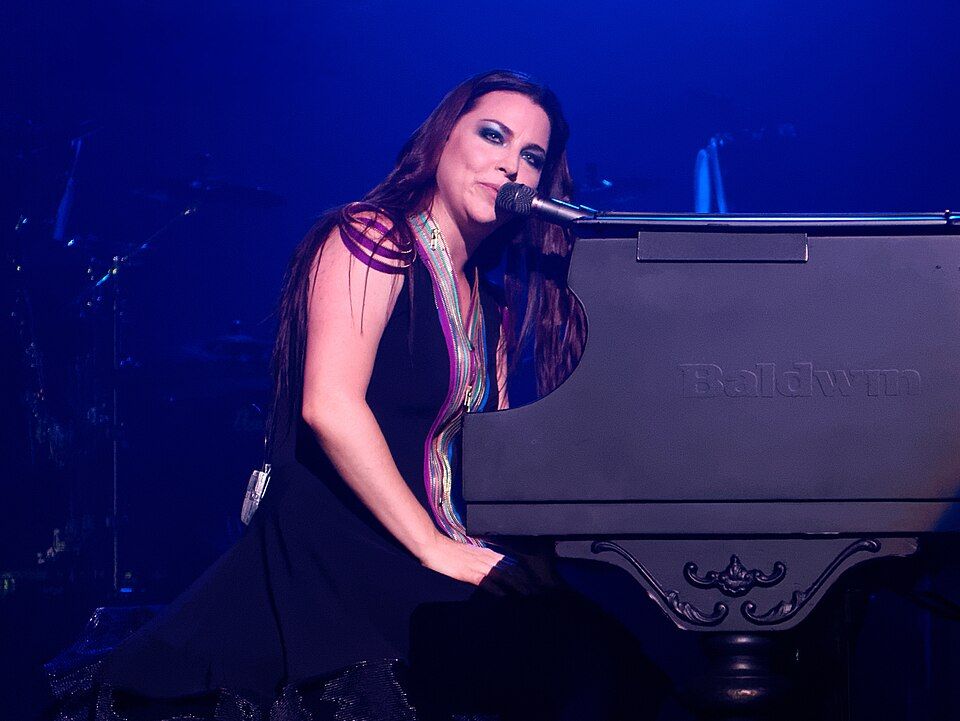
Modern Rock as Metaphysical Signal in Lark Lauren’s Universe
Lark Lauren 7.9.2026
Modern rock carries a pulse that slips beneath the surface of ordinary experience. It stirs something instinctive, something ancient, something that refuses to stay asleep. In Lark Lauren’s Tourniquet series, that pulse becomes part of the metaphysical architecture. His characters move through a fragmented world shaped by digital noise, overstimulation, and the quiet ache of disconnection. And in that landscape, music becomes more than background. It becomes a force.
Evanescence appears at moments when illusion cracks. In The Tourniquet – Too Many Masters, the protagonist hears Everybody’s Fool at the exact moment he begins questioning the curated realities around him:
“Without the mask, where will you hide?
Can’t find yourself, lost in your lie.
I know the truth now.
I know who you are.”
The timing feels uncanny, almost intentional, as if the song itself were a messenger.
There is another Evanescence presence in the Tourniquet universe, quieter but deeper. It emerges in the junkyard scene, when the protagonist begins to question whether the chaos outside is real or simply a projection of his own mind:
“He began to wonder if all the crazy was just in his mind.”
This emotional shift mirrors the architecture of Breath No More, the ache of self-recognition, the exhaustion of carrying illusions, the longing to breathe beyond the mask. The song isn’t quoted directly, but the scene carries the same tension between authenticity and the false self, the same quiet collapse of illusion that Evanescence expresses so precisely.
In This Moment enters the story with a different kind of fire. Maria Brink’s Sex Metal Barbie becomes a moment of reclamation. In the park scene, the protagonist listens to the song at full volume, the lyrics clashing against the serenity around him:
“Sex metal barbie homicidal queen…
Baby go ahead, I’ll be the villain you can blame…”
The collision between the song’s aggression and the peaceful setting mirrors Father Labby’s own struggle: pressure becomes transformation, noise becomes clarity, judgment becomes initiation.
Breaking Benjamin adds another layer. Their music often feels like the emotional underside of awakening - the shadow work, the fracture, the longing for something beyond the self. It resonates with the darker passages of the series, especially the moments when characters confront the Sleeper within.
Ghost’s Little Sunshine becomes something else entirely in A Hope That Never Dies. The lyric “You will never walk alone. Call me Little Sunshine” doesn’t stay a lyric. It becomes presence. It follows Father Labby like a whisper, not as a song but as a companion:
“‘You will never walk alone. Call me Little Sunshine.’
The words threaded through Father Labby’s thoughts like smoke.”
The metaphysical blends with the musical until the boundary disappears.
The Lark’s Universe Playlist ties all of this together. It isn’t just a list of songs. It’s a map of emotional and spiritual resonance. Each track becomes a doorway into meaning-making, a way to translate feeling into insight. Listeners often describe the same sensation found in the Tourniquet books: the sense that music is speaking through them, not to them. The playlist becomes a metaphysical outlet, a place where rock, metal, and atmospheric tracks converge into a single stream of symbolic interpretation.
Playlist link:
https://www.youtube.com/watch?v=lHZKPYQnsmc&list=PLkmKnJB9n0tfOYQ6pFSfeqmOdJgAN0D9N
Across the series, music keeps appearing at turning points. In Too Many Masters, it cuts through illusion. In A Hope That Never Dies, it becomes continuity and quiet hope in a world unraveling. In Shivers, it becomes communion, a rhythm that synchronizes people beyond language, beyond ego, beyond the limits of the self. The dance scenes in Shivers feel like concerts of the soul, where movement replaces speech and resonance replaces explanation.
This is why modern rock fits so naturally into Lark Lauren’s metaphysical world. The music carries the same emotional architecture as the narrative: the pressure that forces awakening, the longing that drives transformation, the presence that guides characters into deeper layers of themselves.
In this universe, rock is not entertainment. It is signal and meaning. It’s the pulse beneath the story, the rhythm that keeps the soul awake.
Stay connected to new essays from Spirital Space.